
Notifications
Clear all

Topic starter
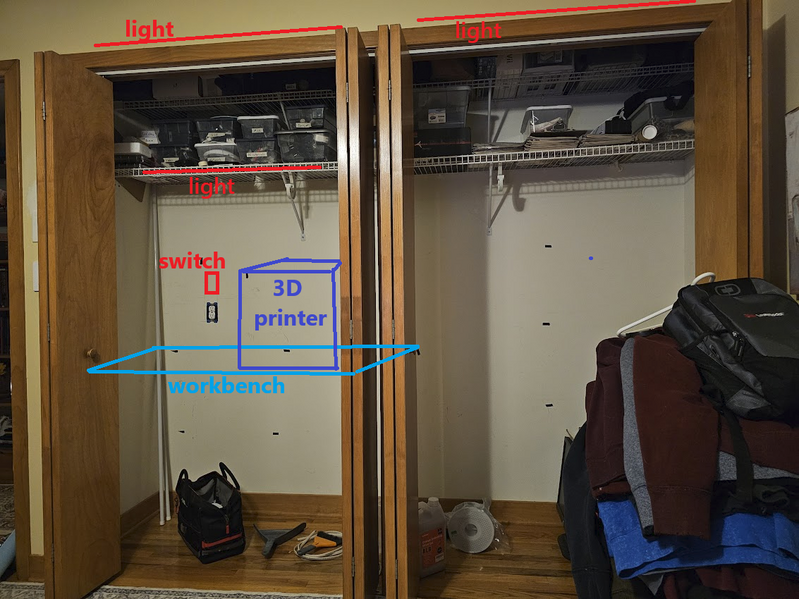
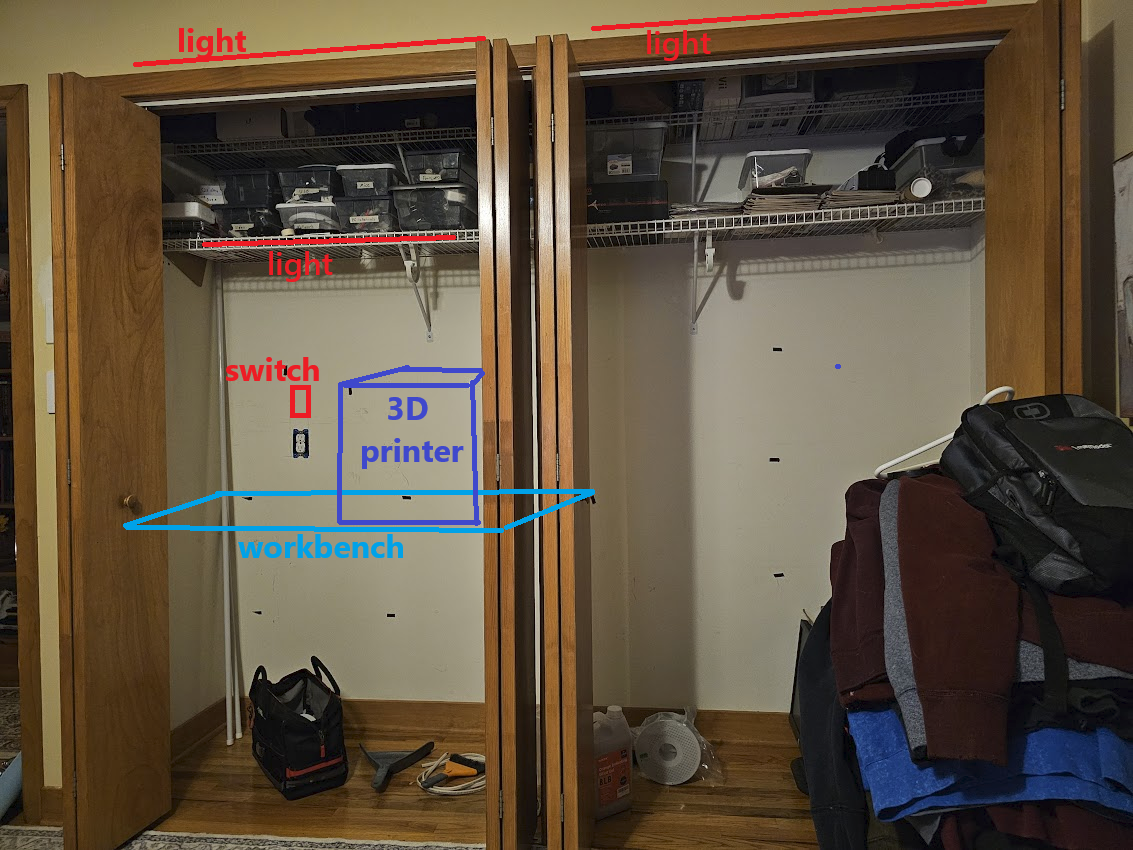
Adding 3 lights to a closet. Any ideas on how to incorporate that lower light so that all 3 operate via the same switch?
The two ceiling lights are simple to run the wires into the attic and down into the wall. Though, what to do about the light i'd like to attach to the underside of the shelving?
I have a few ideas, but i'm not particularly fond of either so hoping to hear some alternatives.
-
simply plug the lower light into an outlet controlled by the switch
-
build a hollow/floating shelf under the metal shelf and attach the light to that instead of the wire shelf. The cord can then enter the wall via the wooden shelf's hollow path and be wired into the switch box without the wire ever seeing daylight.
-
bring the wire along the wire shelf, down the wall, and drill a hole into the switch coverplate's face. (pretty poor idea, but hey, i thought of it, so it goes on the list).
Posted : 19/09/2025 1:42 am

Power? 12V, 24V? Mains?
What sort of voltages are we dealing with?
Take everything I say with a pinch of salt, I might be wrong and it's a very *expensive* way to learn!
Posted : 19/09/2025 2:33 am
Topic starter
They'll just be LED batten lights. The one on the rack would only be around 10-20 watts. They'll either be 120v, or i could buy a separate transformer and just run 12/24v through the cables to the lights.
In either case, i'm curious on what ideas others have toward the cable management for the lower light.
Posted : 19/09/2025 2:26 pm
Voltage is the issue here because we have to treat mains level supplies with caution. It's OK for someone to go away and play with live cables but not if we've even so much as suggested that they should/could. There are a lot of people on the web that play with high voltage and more than a few have come unstuck, often ending up in a little wooden box, after the EMS has scraped up what was left. Fractal wood burning is one of the most dangerous ones but even wiring a ceiling rose can kill you if you don't exercise care.
The great thing with low voltages (most strips will work at 5 or 12V) you're not going to come to any harm provided the low-voltage DC supply is correctly managed - it's generally better to makes sure you get your adaptors from a certified supplier as the Internet shops like eBay and Amazon often carry stuff made in the far east that isn't close to being safe for use.
Let's see if anyone else has any ideas; I just wanted to give you the usual "parental advisory" because I wouldn't want to have to explain to your family while they chase me down the street with pitchforks and torches. 🤣 🤣 🤣
Take everything I say with a pinch of salt, I might be wrong and it's a very *expensive* way to learn!
Posted : 19/09/2025 4:23 pm
Topic starter
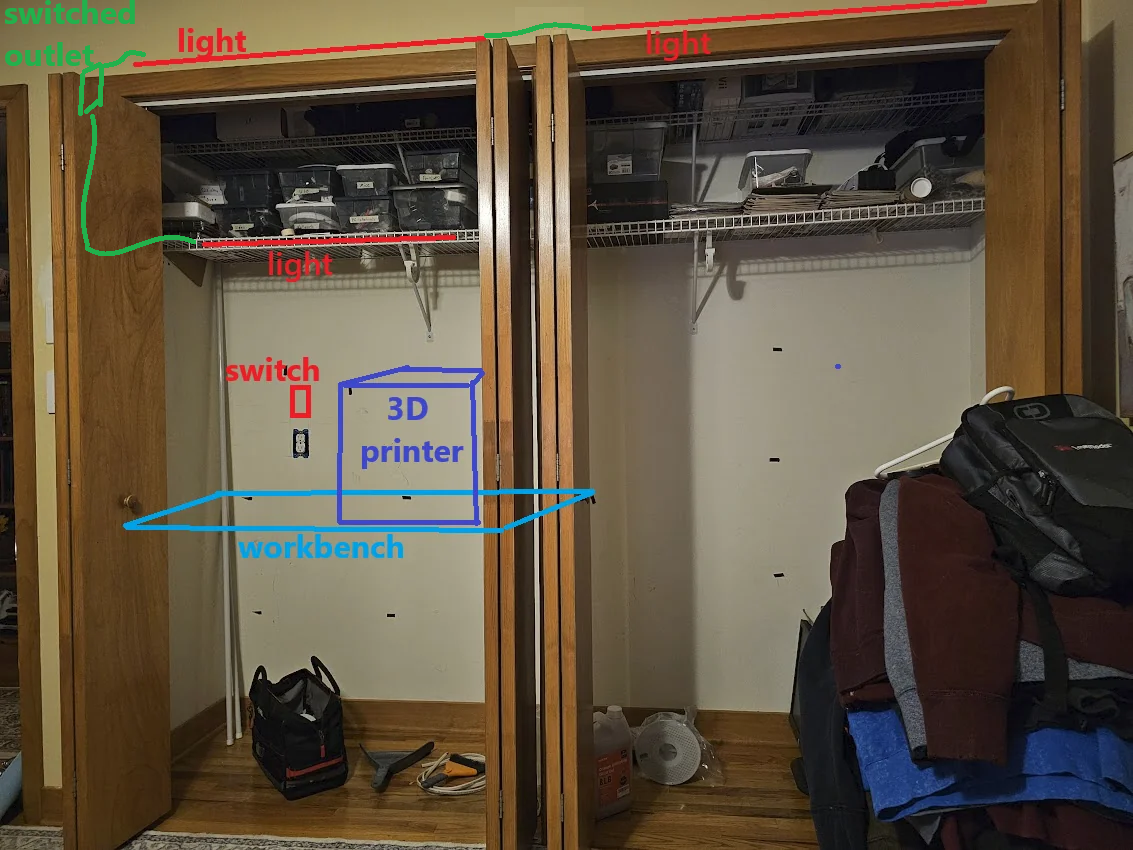
Came up with a decent way to minimize the exposed wiring while keeping the suspended shelf light. Adding a switched outlet up in the front corner of the closet and then just plugging the light in as normal. Still curious on further ideas though.
i guess for context, while it's not my profession, i'm fairly capable with electricity. Rewired most of our houses, added subpanels, installed my own heat pump, air handler, water heater, etc. Even replaced and reconnected the main line from the transformer.
Posted : 19/09/2025 4:43 pm
In some parts of the world, that's actually illegal (because people get shocks or start fires) of course YMV. If I need to hide wires, I just cut a trench in the board and run some plastic conduit through it which protects the cables and fills in most of the void so it can be plastered over later. The terminations come out through standard connectors.
Take everything I say with a pinch of salt, I might be wrong and it's a very *expensive* way to learn!
Posted : 19/09/2025 5:09 pm
btarb24 reacted