Hello everyone! Sorry for my English but I'm using a translator. I am impressed by your efforts in building an artificial sun! Optics remained to be fully successful. I found a program online that can help with this. I plan to build a prototype in the near future but I'm sharing the information with you because together we can do it! What do you think about it?
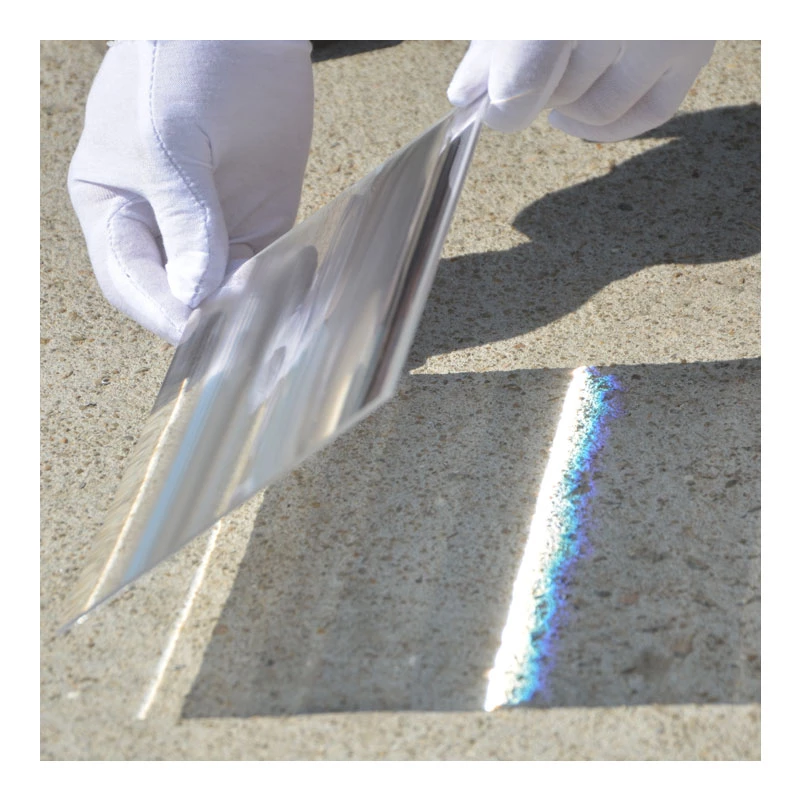
Seems like the addition of the emulsion (or what he calls emulsion) that gives the effect. He picks up the waterproof one later and it definitely appears bluish. What a find this is!
Yes, it's really a nice find and one of the most important pieces of the puzzle.
To make my own epoxy sheets boggled my head to be honest 😆 I don't have the patience to fiddle with epoxy too much and it's also pretty expensive if you want larger windows. The inkjet film is a great discovery and I can't be thankful enough for that.
Very important is, that the LED has enough blue spectrum. The more you go towards 5000K, the more the blue scattering becomes less visible from the inkjet film. But there is a solution to this problem which I mentionend before.
With a 5600K LED you can put a 1/8 Blue CTB gel in front of the LED, it will filter out some of the red and orange waverlengthes of the LED and rise the color temperature about 700 Kelvin. So you can basically convert a 5600K LED into a 6300K LED without much light loss.
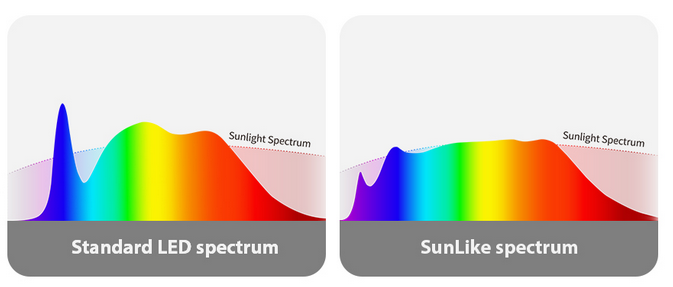
This is very important, because the best LED chips like the one from U-Home LED are only available in 5600K and have almost perfect sunlight spectrum. CRI 99 which is indistinguishable from true sunlight.
There is no LED on the market as far as I know (and I searched a lot) with a CCT of 6500K which has this kind of spectrum:
So with an eigth CTB gel (for example Lee Filter number 218) you can transform the spectrum of any 5600K LED slightly to get enough blue scattering with the Inkjet sheets.
In the next days I will post some comparison pictures of a 5600K LED with and without a CTB gel, so you can see the difference of the blue scattering of the Inkjet film.
Interesting comment thread to a post about, basically, the same thing we're interested in here. Even Jonathan Clark of Innerscene chimes in, including a comment on Matt's video on using a broke TV to make a sunlight mimicking panel.
I've been following this thread and am excited to take my own shot at it. I would like my lamp to be wide and flat enough to hang on the wall as a flat false window. I've been thinking about how to accomplish that and I am thinking the following:
That one is not perfect--it is glass instead of acrylic which will make it very heavy, and the minimum order quantity is 5. But it has the advantage of being quite large (496 mm) while having a depth of focus of only 140 mm.
The great thing about that is they are 6500 K which should be the ideal color, and should be easier to cool since they would each use only 9W and would be spaced out. In a 4x4 array they would dissipate 144 W which seems reasonable.
3. I have not been able to find this, but some sort of refraction panel would be nice. This would be like the fresnel sheet, but would instead just bend the light down by about 30 degrees or so to give the impression that the sun had some elevation, rather than just shining straight out from the wall.
The tyndall sheets could be placed between the fresnel and refraction panels.
My first test fresnel lens should arrive from ali in a few weeks.
Sounds like an interesting plan! Keep us posted on it. I know I've seen similar fresnels out of acrylic on Aliexpress so it may be worth searching for to find a bargain. Alternatively, you could order some smaller fresnels and mount them together.
Short focal length but large enough to get a big window without spending too much when arranged in a grid. They push the limit of a 'clean' output though - the projected light isn't the sharpest and it isn't perfectly square but that's ok as I'm going to slightly diffuse them to perform a bit like a 'semi-cloudy day' sun.
@diyperks Do you plan to make other videos with artificial skylights in the future? With the discovery of the inkjet film there are much more possibilities for various designs, be it with fresnel lenses or parabolic mirrors or projectors 🙂
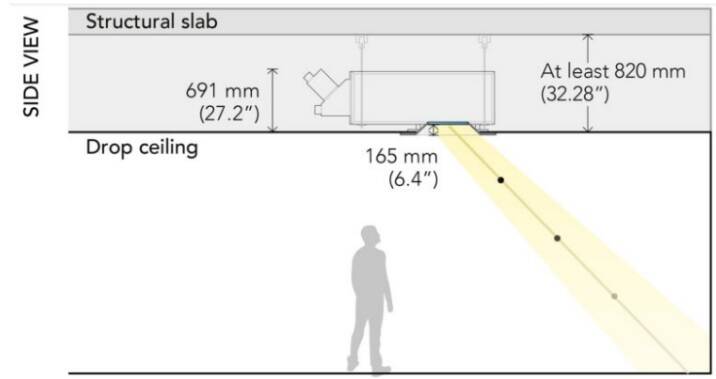
"The patents state that they use a very small LED chip, which sits in a tapered light pipe and then is directed through a prism to elongate the focal length and make it possible to fit a collimated light source with a divergence of 2 degrees in such a compact case" @nolo if you still have the link to the patent I am extremely interested !! not really for this project but for a lot of others
I'm really glad that my contributions helped, I was hesitant at first to only post a link to a video without any testing but I guess my youtube-foraging skills came helpful 😇
Thanks again for the feedback concerning the CCT needed to have a convincing tyndall effect, I'm a bit stubborn on CCT as I really dislike the light coming from >5000K leds.
I have been thinking a lot about this subject during my work hours (oops) and had yet again another idea : broken TVs monitors.
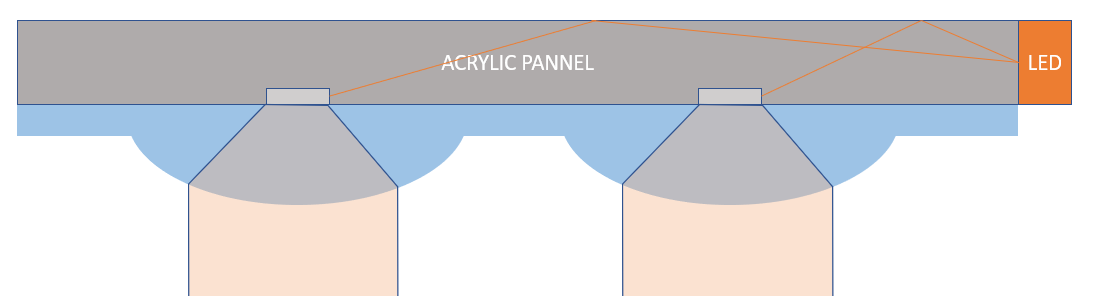
with this we could build an extremely thin pannel that still focuses light to near infinity, and even bend the light a bit by playing on the dot-lens alignment (not displayed on my shema cause I had this idea while writing this text).
stick the printer sheet on top of it and call it a day!! (in a perfect world at least)
And yes, it was extremely helpful, because these inkjet films are widely available and otherwise we would have stuck with making our own epoxy or fishtank rayleigh scattering sheets, which can be hard to make, are somewhat impractical and also more expensive.
Now we mainly just have to concentrate on the optical design. For me personally the projection attachments in combination with LED studio lights are perfectly fine because they produce very clean light with low divergence and are energy efficient. And the LED studio lights these days have high quality LED chips with high CRI, are controlable via smartphone app and are complete with cooling fans and power supply etc. - so out of the box ready to use.
At the end Coelux is not doing anything different, in their big HC45 model they are also just using a LED projector, two mirrors and a big sheet of rayleigh scattering acrylic window in a huge box.
In this video @ minute 1:40 you can see how the inventor from Coelux, Paolo di Trapani describes his HC45 System:
In the protruding square box sits the LED projector, which has been designed to appear like a round sun orb to the viewers eyes. The light of the projector then bounces off two mirrors and finally is directed through a rayleigh scattering window.
The advantage beside costs we have is, that we not neccessarily have to build a huge box around the components, because we can use our rooms as a "box" and can place the optical elements anywhere we like.
The projector I use can be hidden in a DIY case made out of white painted Multiplex wood and then mounted with an adustable mount (like a video projector mount for example) at the ceiling or wall etc.
I just have to experiment with the design of the rayleigh scattering windows or mirrors and how and where to place them in the room to make it as realistic, unobstrusive and convenient for daily life. My goal is just to see the blueish window and the sunlight patch on the wall or floor. Everything else has to disappear.
BTW, I absolutely love how the Coelux HC45 System looks in these pictures, such a nice atmosphere:
Using mirrors is pretty smart. One idea I had a while ago was to make a projection box and have it on the wall/near the floor pointing upwards towards the ceiling, where an angled mirror with the scattering sheet covering it can then reflect the light at an angle into the rest of the room. The benefit is that the projection box can be tall without being too much in the way, with the angled mirror mimicing a skylight.
@diyperks Do you plan to make other videos with artificial skylights in the future? With the discovery of the inkjet film there are much more possibilities for various designs, be it with fresnel lenses or parabolic mirrors or projectors 🙂
Yes indeed! I'm thinking of going with fresnel lenses for V2, aiming for a compact and easy to build design for everyone. The discoveries in this thread are really exciting!
While parabolic mirrors result in the best colimated light production with no abberations, they are difficult to make at home because of the precision required for the reflective surface. What isn't difficult however is a 2D parabolic trough - simply 3D print a few parabolic profiles and stick some plastic mirror film onto them to make a long trough.
This trough can then reflect the light from an LED strip and colimate it precisely, though only in one axis. Although somewhat wasteful, it would be possible to add some dividers between each LED, filling right into the trough, blocking the light from spreading to the adjacent mirror surfaces, resulting in each LED projecting a thin sliver light. Arranged as a grid, it could be an easy and compact way of achieving collimated light on a budget. I'll do some experiments.
I'm excited to watch new videos in the future from you!
The idea with a parabolic trough is good, it's indeed much simpler to build this instead of a parabolic mirror with 2 axes. And also a LED strip doesn't need additional cooling, which is another advantage keeping the whole thing compact and simple. There are linear fresnel lenses which do the same as a parabolic trough, but again with chromatic abberations.
In this picture it's the sun projecting its light onto the ground, with a LED strip it's the opposite, a light pattern in the size of the linear fresnel lens.
I had also exactly the same idea with the projection box, to put a projector vertically standing on the bottom to project the light upwards against a tilted mirror, then shine the light through a rayleigh scattering window. This is possible with the projectior I have here on hand.
Maybe the depth of the box can be only about 25 cm. This makes it possible to fit inside most rooms and not take too much space. The light beam of the projector has just to fit the desired size of the rayleigh scattering window, which will be dictated by the divergence angle of the light beam (focal length) and the distance to the projector. The advantage is, that a tilted mirror takes less space than a horizontally mounted mirror for example. That makes it possible to keep the box relatively small in depth.
I can imagine that such a box can be build in such a way, that it will be indistinguishable from a real wall with a window. Also you could put such a box in the same manner onto the ceiling (horizontally instead of vertically), creating a false ceiling with a roof window.
Coleux also has a similar product to this idea, the model 45 square.
It's also a projector built into a wall, shooting the light against two mirrors and creating the feeling that the light is coming from outside. It's a great idea. Basically it's almost the same as the normal HC45 model, just mounted like a wall vertically instead of horizontally like the ceiling window.
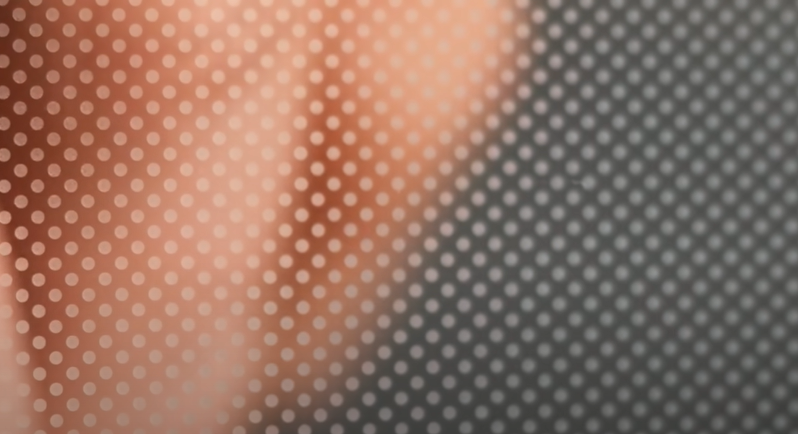
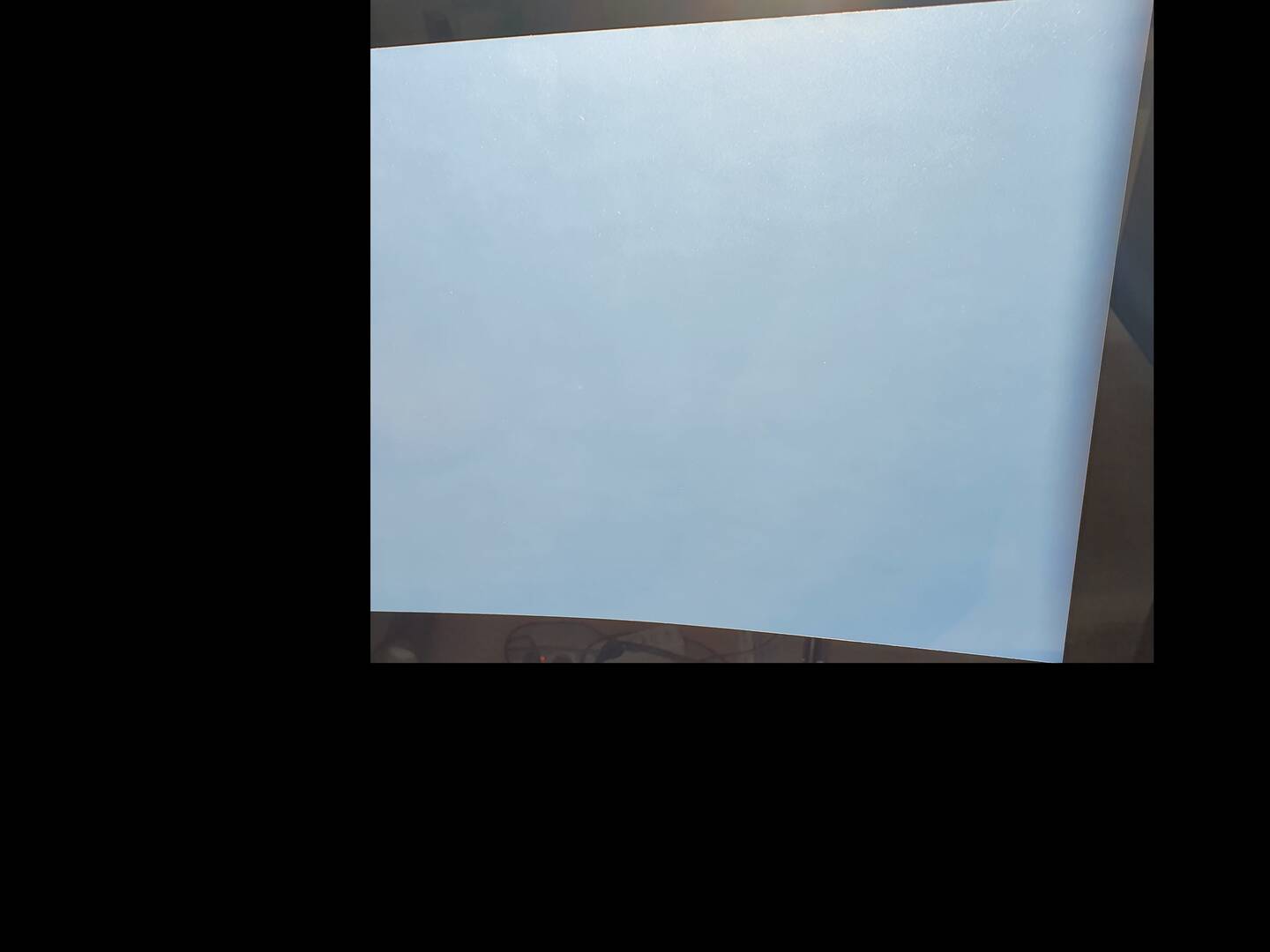
I made some pictures where you can see the difference between 5600K and 6500K.
As I have a bicolor light with adjustable Color temperature (2700K - 6500K), I don't need to put a CTB filter in front of the LED, but this gives you an example how the blue scattering is affected if you go lower in color temperature.
5600K
6500K
The difference is not huge but noticeable. The more you go downwards from 6500K, the more the scattering becomes less bluish. In some cases if a 5600K LED is used, it's not a bad idea to put a light CTB filter in front of it to transform the LED into a higher color temperature. Finally it depends on the personal taste, some people may like the less saturated blue more. For me personally 6500K in combination with the inkjet film is spot on.
A question for @nolo and anyone else that's been testing this. Sunsets have their reddish colors because there is even more atmosphere to scatter the short wavelengths. If you stack multiple inkjet sheets do you get a redder look? If so it could be really cool to have sunset "shutters" on the artificial window that would accurately create the late evening colors.
@allmanbro2 Yes, if you put multiple sheets in front of the LED, the light gets more and more orange, till it gets reddish if you put many of them in front.
Official Brand Store, diyledu-home.com Our Tik tok account, @diyleduhome Our Tik tok store, https://www.tiktok.com/@diyleduhome
Aliexpress store, https://diyledu-home520.aliexpress.com/store/1101410436
Ebay store, https://www.ebay.com/usr/joy-street, or https://www.ebay.com/str/indeedstore01
@diy-led-u-home you mean, the exact same one you presented in your previous looong post in this topic ? the one that has a CCT too low to achieve good results in our application? please stop x)
Anyway thanks @nolo to confirm that multiple sheets makes the light goes red, it will probably help me to achieve a less "cold" color temperature if needed !!
@allmanbro2 the shutter idea is really cool also, maybe a sort of "theadmill" with different densities in front of the mirror could do the trick ?
Wow, this is a really interesting thread with lots of great ideas. I'm currently trying to build my own artifical sun, as i'm working from home and my room is not very bright. I quickly came to Matthews solution and it really blew me away, but sadly it is to big for my room.
I'm currently using a 80w videolight with a softbox which is great for illuminating my space, but the light is very soft and it doesn't "feel" like it is sun. It's high CRI but the light is more on the cheap side, so they might just be lying 🙂
The idea with the projector is great, did you try it out with the injket sheets? In the youtube video it looks really great even without collimated light, but i wonder how it looks and feels when the light comes from the nanite projector!
Did any of you tried the SunLike LEDs from Seoul Semiconductor?
Someone at the budgetlightforum did extensive testing of different leds, and the SunLike LEDs are leading, here is the link to the excel sheet.
@diyperks I found your concept brilliant, I've been looking for exactly this type of lighting for years! Do you plan to release a video for V2 this year? I think to wait for your V2 if this is the case! 🙂
I was planning on trying out the nanlite projector setup with an acrylic mirror and the inkjet film. In an effort to minimize cost I was looking at alternatives and stumbled across this light as well as this one, from my understanding those led heads wouldn't fit the smaller projector but it would fit this fresnel. At the time of this post those two can be purchased for $303 or $366 if you go with the bi-color with shipping included. The main difference between the cheaper led head and the one you mentioned is CSB vs COB. The led heads that I linked have the advantage of producing (with fresnel) 126,000 lux @ 1m 6500K, 30,410 lux @ 2m and 12,870 lux @ 3m compared to the 60b @6500K with 32,380 @ 1m, 7604 @ 2m, 3308 @ 3m. According to the previously linked lesswrong post direct sunlight is closer to 100k lumens, and I'm concerned that if we don't approach that threshold that we may lose some of the potential health benefits. I'd imagine a 1m x 1m square artificial sunlight @ 100k lux placed centrally would be enough to make the entire rest of a 5m x 3.5m room close to 1k lux? I think there is a way to calculate this, but I'm quite out of depth and didn't want to embarrass myself with a calculation that didn't take relevant factors into account.
I'm interested in understanding the advantages as you see them between the projector and the fresnel in the artifical skylight application (is it just light bleed and shape control?). Ideally I'm trying to find the most affordable solution to producing the largest and brightest possible high quality sunlike light. I'm also interested in hearing your thoughts on CSB vs COB in this application. Additionally, I'd like to simply point the fresnel/projector directly into the mirror instead of installing a separate mirror like the below diagram illustrates. I've done a few diy projects but would consider my skillset beginner compared to what I've seen from other posters in this thread, this has largely lead to my decision to try what I'm seeing as the closest to an out of the box solution as possible. I'd love to see a picture of your full setup in both the on and off config.
I'm also curious as to how much of a decrease in brightness we should expect once we add the inkjet film. Also apologies if this has already been answered, but is there a reason why acrylic mirrors seem to be preferred over glass? Is it just cost? I'm almost sure I'm overlooking something and would greatly appreciate input from those with more expertise before I sink $400 into the project.
Huge thanks to @diyperks for bringing the possibility of an "artificial sun" to mind. I live at 47 degrees latitude and work in a timezone that makes me start my day 2 to 3 hours before sunrise in the winter. I generally feel good when I wake up during the back half of spring/summer/ front half of fall but always have felt almost like I'm hungover during the winter upon wake. After buying a uvb sunlamp, improving my diet and optimizing my exercise routine towards health I'm almost certain that the lack of reliable daylight during my waking hours is the root cause of what is messing with my circadian rhythm. I was initially planning on building a "lumenator" but my girlfriend absolutely hated the aesthetic, the artificial window/skylight is a much more elegant solution in my (and her) opinion. Looking forward to learning more and giving this a shot.
Yes, I tested the inkjet sheets with the Nanlite projector and it works great. The pictures I uploaded with the inkjet films are with the light coming from the projector. I just don't have the time at the moment to built a complete window or to make the door with the window I mentioned because of work and renovations etc.
But this is on my list for the future and with the projector and the inkjet films you can really imitate sunshine and sky at home in any way you like. The possibilities are endless. The advantage of the projector is, that the light is very clean without chromatic abberations and with the blades you can shape it in any form. You can project a circle if you leave the shutter blades open or you can project squares or rectanangles etc. Even patterns like blinds etc. are possible because the projector has a slot for so called "Gobos".
Hi, the Nanlite lights you mentioned work with the bigger projection attachment because they have the bigger bowens mount. I have the small projector with the "mini bowens" mount which works only with the Forza 60 and Forza 150 (normal versions and not FS versions).
If you don't care about the size of the projector I would suggest to buy the bigger Nanlite projection attachment, because this has the standard sized bowens mount which can connect with nearly any studio light on the market, as the majority has this standard sized bowens mount. The bigger projector is more expensive though, but the lights are cheaper.
And about the light output of 126000 lux you mentioned. This is only achievable with the bigger projector anyway as the small one I have is only compatible with the lights I mentioned up to 150W, which will not give you this amount of light.
Sunlight intensity at its highest peak is according to wikipedia in the range of 120000 lux, but this is the brightest intensity when the sun is coming from the zenith (right above your head without any angle) and this happens only near the equator. In europe the sun has lower intensity in the summer.
If you want to produce such high intensities of light at home, you have at least to look after 1000W LED studio lights. But these are not cheap, they will cost at least 2000 to 3000 euros and don't forget the electricity bill.
I can ensure you, that you don't need this kind of light power in your home, unless you want really the ultimate experience and feel like you are in egypt at the brightest sunny day in the summer 🙂
Our eyes and brains adopt fairly well to lower light levels and even with 150 Watts you can create a real believable sunlight effect with good amount of brightness. It also depends of the size of the room. In a normal medium sized room with let's say 200 square feet 150 Watts of light power is good to make the effect realistic.
My opinion is, that there are no real health benefits for the body because the LED lights we use don't have UV which is neccessary to produce vitamin D for example. But the benefit is, that we feel different with such directional light and blue sky diffusion. The rooms we live in can greatly improve in terms of calm atmosphere with such lighting, just as it does in the summer when we enjoy the sunlight. I would say the benefit happens only on a psychological level.
@nolo First of all, thank you for the prompt and thoughtful response.
1) I agree that anything above maybe 200-300W that runs 8 or so hours a day might be excessive, that being said, 300W @ 8 hours a day is still only 876 kWh/year which in my locality ends up running about $115/year: hypothetically if there was a positive health effect from an additional 300W it would be in the ballpark of what my most expensive supplement costs (High EPA/DHA fish oil @ .44/day | $160/year). From my research, electricity is about 2.3x ($0.30 KwH) as expensive in the costliest countries so this would obviously change the calculus. This is also just one aspect of operational cost, with higher output lights typically running an additional premium (although not always the case as with the FS series offering from Nanlite).
My opinion is, that there are no real health benefits for the body because the LED lights we use don't have UV which is neccessary to produce vitamin D for example. But the benefit is, that we feel different with such directional light and blue sky diffusion. The rooms we live in can greatly improve in terms of calm atmosphere with such lighting, just as it does in the summer when we enjoy the sunlight. I would say the benefit happens only on a psychological level.
UV is definitely part of the equation that an led light source doesn't solve for, thankfully this can largely be addressed via cheap supplementation and if for whatever reason that isn't working FDA approved UVB therapeutic lamps exist although they're on the expensive side ($400ish). I also agree that there is an undeniable positive psychological benefit from sunlight. However my understanding of the science points to a very real physical bio-chemical response to sunlight that is outside of just the vitamin D production from UVB.
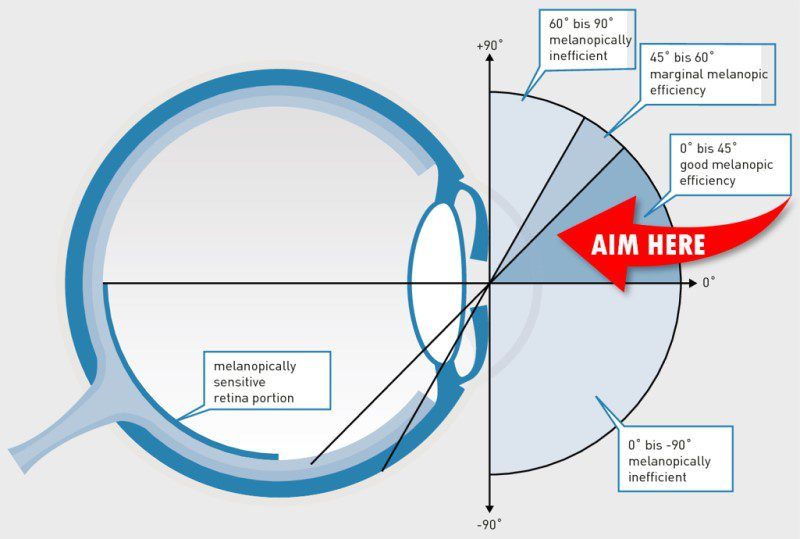
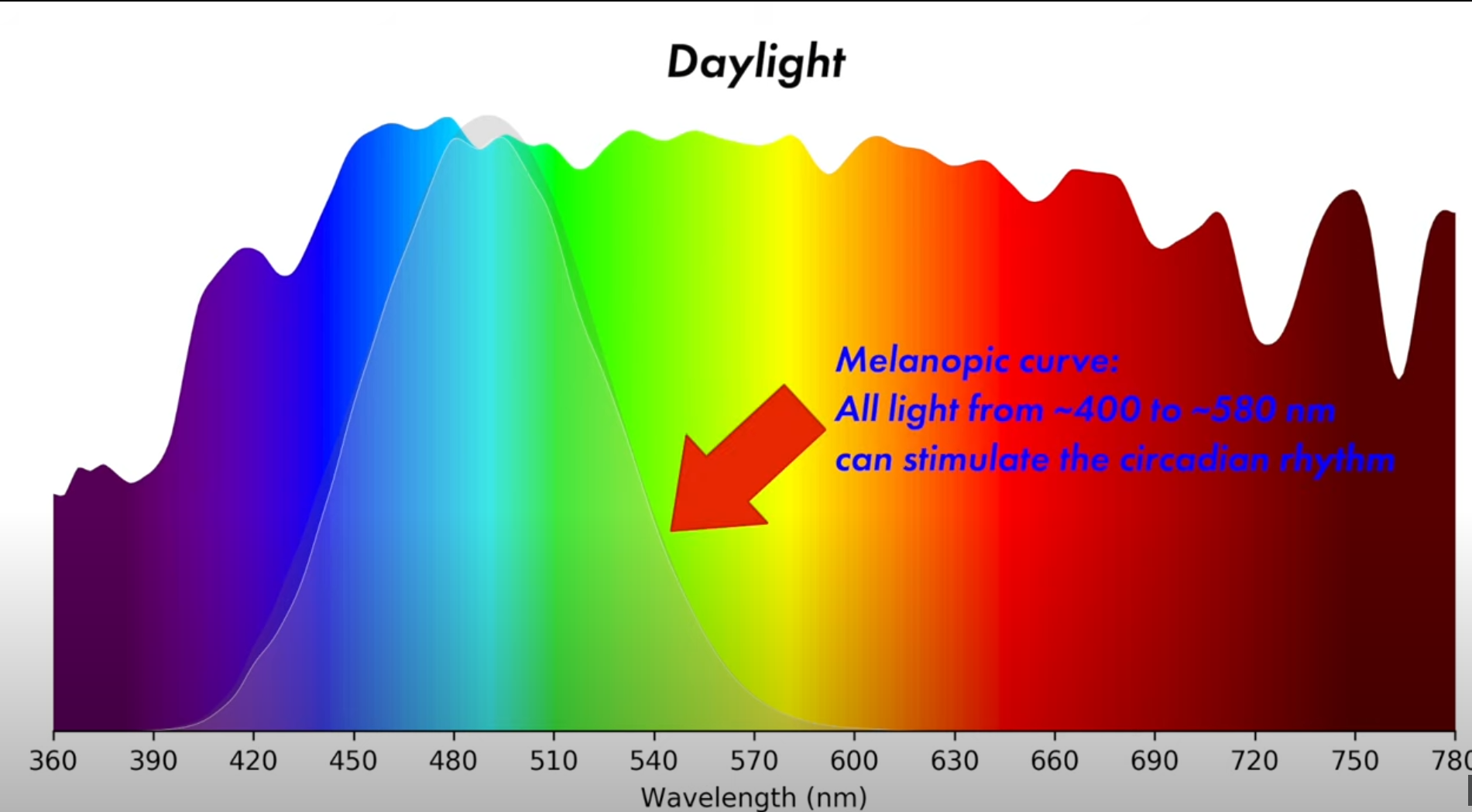
The basic idea is that there are photoreceptors in our eyes that when stimulated with a certain intensity of specific wavelengths signal hormone production. See the below diagram:
The article that diagram is from also mentions several other relevant factors to consider when trying to optimize your lighting to benefit your circadian rhythm:
lighting intensity (dim/bright levels)
color temperature (warm/cool hues measured in degrees Kelvin)
Timing (time of day, transition timing)
Light history (context, or historical exposure to light for any given party)
Spatial distribution (direct/diffuse/directionality)
Spectrum (akin to color temperature, but considers non-visual spectral wavelength for potentially greater biological impact
Greg Yuetter has a good video that goes into some of the considerations: I've also posted a visualization of the melanopic curve from his video below as well as some of his sources that I think may be useful for our purposes:
If you want to dig even deeper check out Huberman's (Standford Neurobiologist) podcast on light and how it affects the brain.
3) I appreciate you adding the additional context of 130k lux being the most extreme bright sun. I speculate that there is no additional marginal benefit of getting brighter and brighter light at a certain point and I'd bet that threshold is closer to how bright sun would be (maybe at early morning) on a clear day. Now here is where it gets tricky: because each indoor room is unique it would be impossible to give a one size fits all piece of advice. In fact there is an entire profession in architecture that is focused on putting the right lighting fixtures in each room and it really does require considering a variety of factors including intended room use, cost, size, use of natural light, aesthetics, etc. The reason I bring this up is that the reason why I had even considered that a 100k lux (measured at the inkjet coated window/mirror) would be necessary is because I thought that it might be much more likely to create an ambient environment that is bright enough to be optimally stimulating for the above criteria. I'm not sure how a lot of this looks in practicality and the implementations that we're discussing are orders of magnitude brighter than typical light fixtures so I'm almost certain they're going to be better biologically.
Questions I still have:
a) How do we get the right size of sunlight (or combination of sunlights) to ensure the circadian stimulating effect is optimized?
b) How does the inkjet film affect the spectrum of light that is being observed?
c) If we had a smaller light beam pointed into a larger inkjet coated mirror/window would the film provide enough diffusion to make the entire fixture look lit? If someone has the lights and coating to determine this I would definitely be interested in hearing/seeing how it changes the effect.
Improvements:
a) If someone can figure out how to change the angle of the sun throughout the day in an affordable way this would be great because it would likely have a positive stimulatory effect on our biology. I think this could be accomplished with a single led head with a rig to rotate the light itself, maybe more practically with a fixed light and a single rotating mirror like in the hidden vertical wall implementation shared earlier.
b) timed hue changes to mimic sunrise/sunset (I think this can be done with any bicolor light that uses DMX (such as nanlite bicolors), and a DMX home assistant integration)
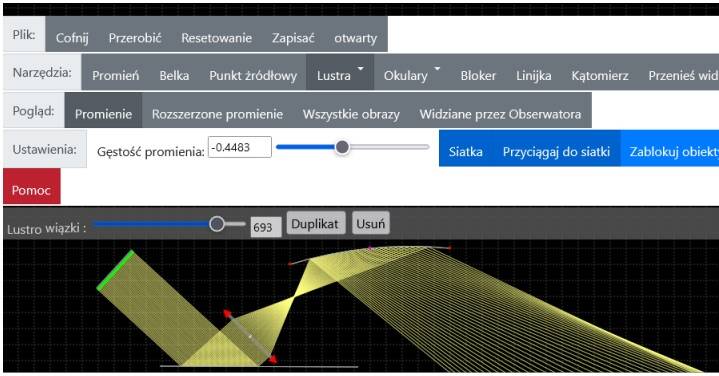
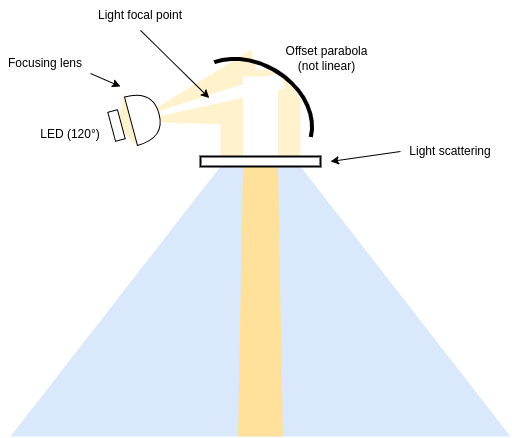
Apologies for jumping in the conversation on a different topic, but I've been mulling over how to preserve the light's direction, while also minimizing footprint. Would it be possible to use an offset parabola to cut down on space used? The parabola would be rotated, so it wouldn't take up as much space. The light source wouldn't need a 100% straight beam, just narrow enough to hit the parabola. Here's a diagram based on my (limited) understanding of how light would go through something like this:
Not sure if this is any better than a normal mirror, just a thought 🙂
I was originally going to post everything here in the forum, but it ended up taking a lot of pages, so I kept it all in that document.
My favorite design is on pages 4 and 5. It uses a beam of collimated light from an array of parabolas, and uses a mirror to distribute it over a larger distance.
Apologies for jumping in the conversation on a different topic, but I've been mulling over how to preserve the light's direction, while also minimizing footprint. Would it be possible to use an offset parabola to cut down on space used? The parabola would be rotated, so it wouldn't take up as much space. The light source wouldn't need a 100% straight beam, just narrow enough to hit the parabola. Here's a diagram based on my (limited) understanding of how light would go through something like this:
Not sure if this is any better than a normal mirror, just a thought 🙂
Offset parabolas are a great way to do this! Similar to how satellite dishes work. Definitely needs some looking into. 🙂
Well, I fell down the rabbit hole, like many of you others 🙂 I've been playing around a lot with different ways to collimate light in a skylight shape, and I put a few of my findings and thoughts into a document (apologies for terms and mistakes, this is my first time messing around with optics!): https://docs.google.com/document/d/189A9EmQyvA_9Ck__p21KSFPpKOyXD1A710JvCUDiWX4/edit?usp=sharing
I was originally going to post everything here in the forum, but it ended up taking a lot of pages, so I kept it all in that document.
My favorite design is on pages 4 and 5. It uses a beam of collimated light from an array of parabolas, and uses a mirror to distribute it over a larger distance.
Excellent summary doc! I've been thinking along similar lines, and the idea of two collimating devices (mirror + TIR) has me thinking - what about two linear reflection based collimators? Linear parabolic mirrors are super easy to make - just 3D print the profile and stick on some reflective film. However, as we know it's only collimated in one direction so is sub optimal for this use case, so what if we add another linear parabola straight after it of a longer focal length to then converge the remaining light????
This trough can then reflect the light from an LED strip and colimate it precisely, though only in one axis. Although somewhat wasteful, it would be possible to add some dividers between each LED, filling right into the trough, blocking the light from spreading to the adjacent mirror surfaces, resulting in each LED projecting a thin sliver light. Arranged as a grid, it could be an easy and compact way of achieving collimated light on a budget. I'll do some experiments.
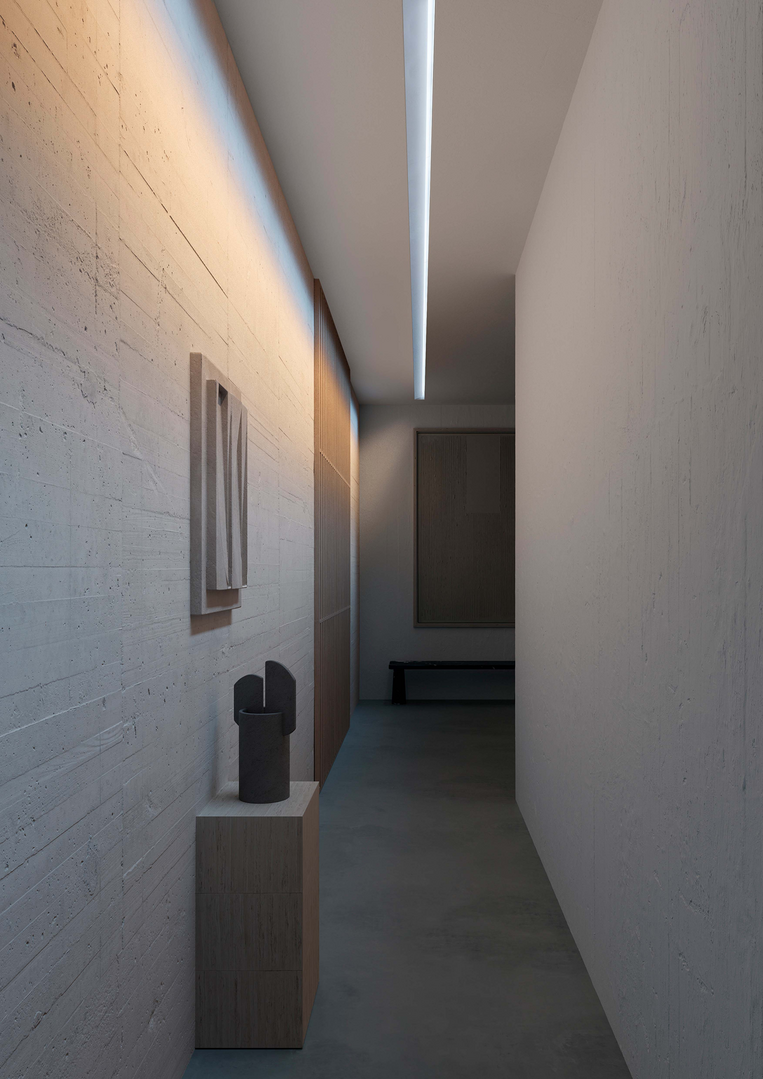
This would be a good way to imitate CoeLux's Sky Line product. I'm not sure they'll be powerful enough, but Philips Hue LED strips programmed to change from bright white through to dark red at sunset would be a great effect.
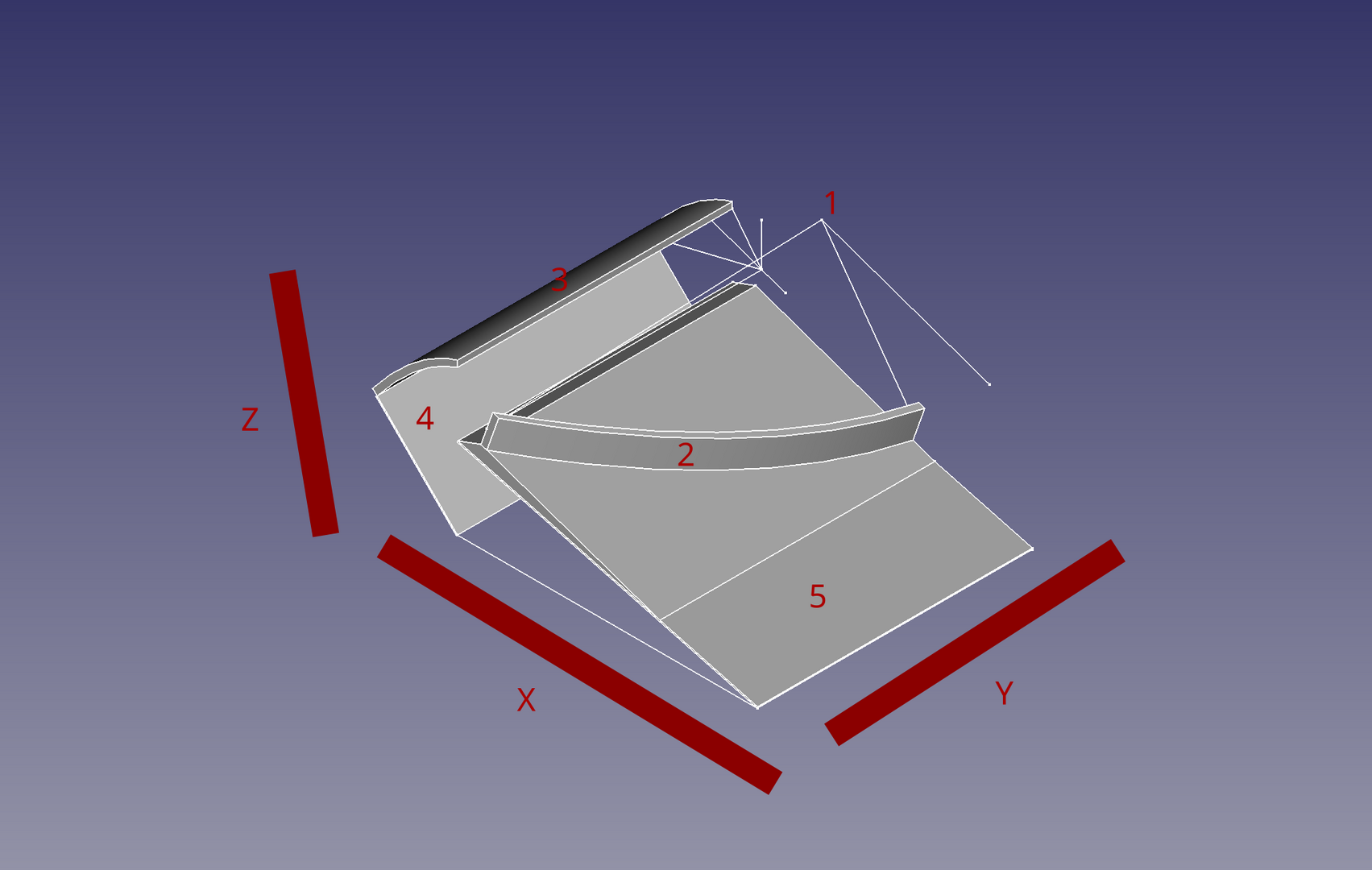
@diyperks that never occured to me... It's starting to look possible! I put together something in FreeCAD (apologies for any mistakes, it's my first time using CAD software), here's a link to it. Big disclaimer, I'm not even sure if I did the math right, so this may be useless at focusing light (hopefully I can build a prototype at some point, but it'll take time). The light location is adjustable by opening the "first parabola layout" sketch and moving the focal point. There's also a spreadsheet called "specs" in the project that has a ton of settings you can mess around with, like mirror thickness, focusing reflector diameter, etc. It'll calculate mirror focal points and such. However, I haven't figured what to use for general structure for the various parts, excluding that the first parabola will sit on top of the mirror.
Here's the design:
And the captions for the design:
Light focal point: most likely a high-powered LED with a focusing reflector. The first parabola sandwich mirrors should extend all the way to here.
First parabola: this collimates light on the XY plane. I haven't put the mirrors in for this part in the CAD document yet, but this first parabola should be sandwiched by perpendicular mirrors. That keeps the light on the Z axis inside the bounds of the first parabola. The first parabola then collimates the light on the XY plane.
Second parabola: this (in theory) collimates light on the XZ plane. See potential concerns at bottom.
Redirecting mirror: This is a 45° mirror that redirects the light from the second parabola.
Primary mirror: The mirror that finally emits the sunlight. It would also ideally have the scattering layer on it.
In terms of what to build it with, I think acrylic mirrors would be perfect. They're flexible, resilient, and can be cut with typical tools. The only 3D printed parts would be the parabolas, and those could alternatively be built by tracing a pattern. The mirror could then be secured (glued?) on the inside of the parabola shape, since it's flexible.
Also, for the LED, ledrise has a very nice collection of high-powered LEDs, but most importantly it has all of the components that someone would need for a high-powered LED, like focusing reflector, heatsink, etc. And, it's affordable! Another distributor I've been looking at is lumitronix, and they look they have some really high quality products at an even better price. I just haven't spent enough time looking through their portfolio yet.
The total for the LED+accessories comes to €83,13, or ~$89.13 (excluding shipping and tariffs depending where you live, they ship out of Germany).
I have all the CAD settings currently configured for a set up based on these parts.
Some potential concerns: The first parabola is quite wide (to account for the diameter of the focusing reflector). My optics knowledge is tenous, but I'm guessing that that width would mess with the focal point going into the second parabola, as the light could exit from quite a few different heights.
EDIT: It looks like ledrise simplifies/potentially hides a lot of the nitty gritty details. Lumitronix seems to represent reality much more accurately (mentioning variation in light angle based on the LED series, etc). I'll see what I can find on their website.
EDIT 2: Looks like ledrise literally marks up lumitronix products and suggests the same things, only without the transparency of lumitronix.