
Notifications
Clear all

The behringer line 2 USB costs here is 45$.
Posted : 11/05/2025 4:27 pm

Can't speak from experience, but both manufacturers have excellent reputations so they should be good.
Take everything I say with a pinch of salt, I might be wrong and it's a very *expensive* way to learn!
Posted : 11/05/2025 7:31 pm
Muzammil17 reacted
@muzammil_wang Ah... rats. I hate it when prices vary around the world.
Take everything I say with a pinch of salt, I might be wrong and it's a very *expensive* way to learn!
Posted : 11/05/2025 7:42 pm
I have found two sound cards, 1st one is the cm108ah from amazon, no reviews , it takes almost 1 month to deliver, 7 days replacement, costs 18$, 2nd one is the creative play!3 , costs 25$. The first one may or may not be legit, but i might be able to return it, if it doesn't work. EDIT: Can i use the PCM5102 audio decoder board?
Posted : 12/05/2025 6:59 am
https://www.tanotis.com/products/that-corporation-that1512s08-u-audio-control-plusmn-5v-to-plusmn-20v-soic-8-pins-40-deg-c-1?variant=505926647824 , this is what is available in my country, they also have the THAT1510 in DIP form, but it is more expensive than the THAT1512. Can i order the above THAT1512?
Posted : 12/05/2025 8:27 am
@Muzammil_Wang
I have found two sound cards, 1st one is the cm108ah from amazon, no reviews , it takes almost 1 month to deliver, 7 days replacement, costs 18$, 2nd one is the creative play!3 , costs 25$. The first one may or may not be legit, but i might be able to return it, if it doesn't work.
The CM108AH is a just DAC IC, it's not suitable for this application, although CMedia chips are excellent.
The Creative Play!3 is a complete sound card solution for USB audio so you almost certainly could use this but from what I can see the input section is designed for "mic level" output so the DIY Perks amp is a bit too powerful.
This sort of device is of the type that's designed to drive a microphone capsule with an internal JFET - essentially the circuit I mentioned up the thread somewhere. It'll be a bit tricky to wire as there will be a four pins on the socket - TRRS.
This carries the two stereo headphone channels, plus the microphone section which (in theory anyway) should be able to be connected directly to Matt's capsule section without modification. At this stage I haven't tried this setup but it's certainly possible. I have something similar floating around the shop, but it's so small I may have (cough) misplaced it.
https://www.tanotis.com/products/that-corporation-that1512s08-u-audio-control-plusmn-5v-to-plusmn-20v-soic-8-pins-40-deg-c-1?variant=505926647824 /a> , this is what is available in my country, they also have the THAT1510 in DIP form, but it is more expensive than the THAT1512. Can i order the above THAT1512?
It's crazy that the THAT1510 costs more, it's a much older design.
You can use the one you've seen here but it's an SMD chip so you'll need a special SOIC-8 to DIP adaptor. They're probably available on Amazon but soldering such a device is quite difficult with a normal soldering iron. It can be done but it's much easier with a hot-air station (at minimum).
Seeing this is available, I'll have to update the existing boards to include the SMD version as an option. The SOIC-8 form factor just fits in the same space the space between the pins on a DIP-8 chip so you could use either.
Take everything I say with a pinch of salt, I might be wrong and it's a very *expensive* way to learn!
Posted : 12/05/2025 10:45 am
Muzammil17 reacted
So, what DAC / ADC can i use instead of the audio grabber? It should be able to replace the audio grabber and use the pre amp output.
Posted : 12/05/2025 12:14 pm
The Behringer is the only one I've tried that actually worked without blowing a fuse (and the fuse that blew were inside the chip so that's always terminal). A later version of the mic might (no promises because I've stepped on this rake before) just might come with their own ADC. Designing with a pre-made ADC chip (one that has a USB endpoint) isn't trivial due to the speed of digital hardware, but there are chips on the market that do just that.
Having the USB hardware baked in makes it much easier for designers to drop an IC into something and just add the supporting stuff like voltage regulators, amplifiers and the like. Mostly bread and butter stuff.
I've found a suitable device but it's reach the EOL now. On the plus side, they are (in the big picture) relatively cheap, but you have to weigh the fact that they are sated for end of production (and may already have passed that marker).
If I'm able to get the resources together to grab a few and make some test boards then we might be able to grab a small inventory and sell them (via some authorised third party/ies) at low cost to end users. This is what I hope will happen with (mostly) Michelle Starfire and one or more of the capsule adaptors. Some of the separate boards I'm developing are for internal use only.
I can use them as modules and to some extent, it's more cost effective to develop each section on its own board to iron out any potential issues before putting the whole job lot on a single PCB (which incidentally would still be smaller than the original due to SMD being so compact vs. THT!)
A bunch of new ones dropped about an hour back but I've been dealing with one of my kids who is stuck in the "need a car to get to work, job doesn't pay enough to support a car" trap.
So it looks as if Banko De Marco is going to get raided pretty soon. Looks like my holiday in the sun is going to have to wait for another year. At this rate I won't be able to afford a spot in a field of cows to pitch my tent - and I'd have to walk to get there first.
Ah, the joy of having grown up children living in a poor area of the country... Trust me, I feel the pain of these guys taking our eyes out and coming back for the sockets.
Take everything I say with a pinch of salt, I might be wrong and it's a very *expensive* way to learn!
Posted : 12/05/2025 2:17 pm
BTW, i remember a user @ldoppea used the usb sound card, and the sound was good although there was noise, i think so it was due to the faraday cage not being done. He connected the pre amp out directly to the mic in. Will it not destroy the amp or the capsule or the sound card itself?
Posted : 12/05/2025 2:20 pm
marcdraco reacted
I'll PM you some more stuff, but it really depends on the design of the input circuitry.
Do it right and add some over-voltage protection (usually diodes, but not always) and the board will be fine - it will just clip which sounds horrible if you accidentally overload it.
The Audiograbber (at least the V3 and V4) that I used blew the moment I pushed the output with some mains hum. Ouch! It's a great shame and it's a superb board and quite too.
Matt wasn't happy with the results from the Behringer as I recall but it may just have been that it's a bind to take part compared to the Audiograbber which has the leads baked in. Converting the Behringer is fair bit more challenging (I didn't even bother, I just plugged mine in via a modified phono cable.
Take everything I say with a pinch of salt, I might be wrong and it's a very *expensive* way to learn!
Posted : 12/05/2025 2:25 pm
Muzammil17 reacted
@marcdraco v3 and v4 , the creative play one? I'm mostly going with the ugreen sound card which has volume knob for headphone and mute buttons. They also describe which IC is used , it is some sss1629.
Posted : 12/05/2025 4:23 pm
Ugreen should be good. The Audiograbber (like this project) gets continuous small improvements so I don't know if they fixed the input with some protection but I won't risk it. 🙂
Take everything I say with a pinch of salt, I might be wrong and it's a very *expensive* way to learn!
Posted : 12/05/2025 5:05 pm
Wow, I just noticed there are >1000 posts in this thread (sorry everyone). Matt has most of the V2 family - the last one dropped today with this:
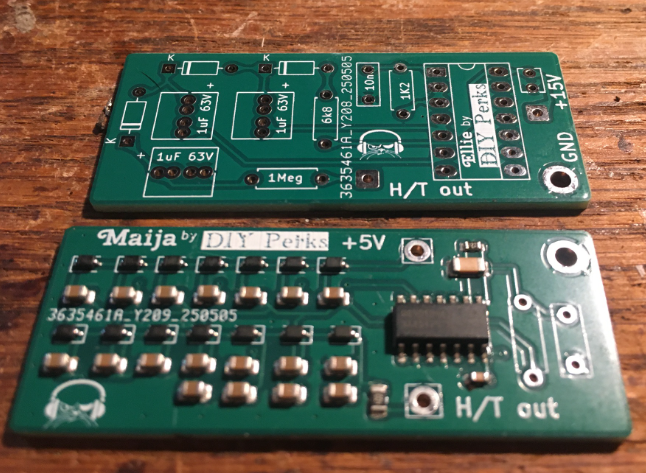
It's still experimental (the one at the back is through-hole only). What does it do?
The one in the front is a high-voltage generator capable of >50V from a USB connection. This won't power a normal P48 professional grade microphone, but it will polarise a true condenser microphone capsule.
You know the ones you look at and your wallet creaks a bit as the notes try to find somewhere to hide.
Fortunately I do have one here that came from China (about £30) so I'll report back when I have time to hook it up to one of the existing heads. The current designs don't support this fully (except Woody) but which has space for the tiny, high-voltage polymer capacitor. This tiny part is absolutely essential to stop the bias voltage from leaking into the JFET's gate and while there isn't anywhere near enough current to destroy the device, it will make a mess of your recordings.
The JFET gate is, itself a tiny capacitor (a few 10s of picofarads) so any DC that gets in, stays there (at least until the power is removed). So a few nano amps of current will "break" the microphone in a matter of minutes. It'll get a little louder at first and then stop as the diode enters forward conduction.
All of this is theoretical. I haven't worked out the actual time to charge; most capacitors leak a little DC but it's rarely an issue in everyday circuits as we're working with currents an several orders of magnitude more powerful and the leaks just become part of the circuit.
Older capacitors (and we're talking 60+ years ago) would often start to leak so badly with age (a decade or two) that they have to be replaced with modern equivalents. Mr Carlson's Lab (YouTube) has multiple videos on this as he deals primarily with the service, repair and conservation of radio and other equipment from that forgotten era. Anyone interested in what we might call stone-age electronics, should give it a browse - he's a Canadian with that warm, welcoming style like Matt.
I don't control Matt's schedule and he knows I work slightly faster than a three legged tortoise dragging a 1 Ton Acme weight, so I can't say when (or even IF) the video will drop, but it will need Matt's touch to explore and explain what everything does. I can write a book about this with all the technical mumbo jumbo and problems, etc. but there's nothing like a 30-40 minute, well edited quality video you can just sit back and enjoy.
Although everything on GitHub is open source and bang up to date with any mods or errors corrected, I'll wait until I check the newest batch before announcing what they all do.
I prefer the modular approach but it means more spaghetti so I expect the later versions to be more complete, but if you have the basic skills, you should be able to make a pretty decent V2 based on Matt's original video but with the improved technology.
I've got some potentially ground-breaking stuff further down the lane but that mostly exists on paper now. Largely theoretical and currently only used in a very small number of very costly microphones due to the complexity of mass production. The first ones arrived back in the 1960s and to this day, they are very much niche because designers like something nice and easy - and circuits based around the Wuttke's 1960s vintage design for Schoepes still reins supreme.
It's simple and effective but has a rake that even caught me out... but, let's keep that a secret for now. Call it a cliffhanger - but you'll see it here first. If anyone wants a development thread separate to this, I'll open one when the first pre-production circuits are ready.
Naturally, I know everyone is wondering "what will it cost?" and "will it be any good?"
To answer the first question. A little more than the existing (let's call it the Shoepe's/Perks versions) but nowhere near as much as a commercial mic.
The second question is a tough one. Simulation suggests (and that's all) distortion levels around the same as the existing models, so pretty good but it has the potential to be better and look even funkier than the current models. While the electronics is hideously complex (at least compared to some of the current circuits, particularly the ones that use a THAT1512) construction should be a lot less error prone giving us all more room to make mistakes in the shields, etc.
It should also have integrated USB out (so no messing around with all those 3rd-party digitisers). Some of these developments arose from talking to you guys so don't be afraid to chip in. I can't make promises, but I'll try to implement any feature that you'd like.
I haven't briefed Matt on some of the latest news yet so you're all getting it straight from Victor Meldrew's mouth (so to speak).
All I can say for now, is that IF (and it is an IF) I can turn the idea into a working design it'll be a first for the maker space and possibly even a whole new way of designing quality mics. But this is all purely theoretical so don't get too excited. It's been keeping me awake at night doing the calculations in my head (because I lost the calculators among the piles of failed experiments).
Matt already produced the best maker-space USB microphone anywhere and we're going to make it better! Because Open Source Hardware rocks!
Take everything I say with a pinch of salt, I might be wrong and it's a very *expensive* way to learn!
Posted : 12/05/2025 8:52 pm
Muzammil17 and PolarYetti reacted

@marcdraco
Looking forward to seeing your and Matt's creation, I can't wait to see the V2 and bring it to life already) 😊
Posted : 13/05/2025 12:09 am
marcdraco reacted
Is the capacitors polarity correct?
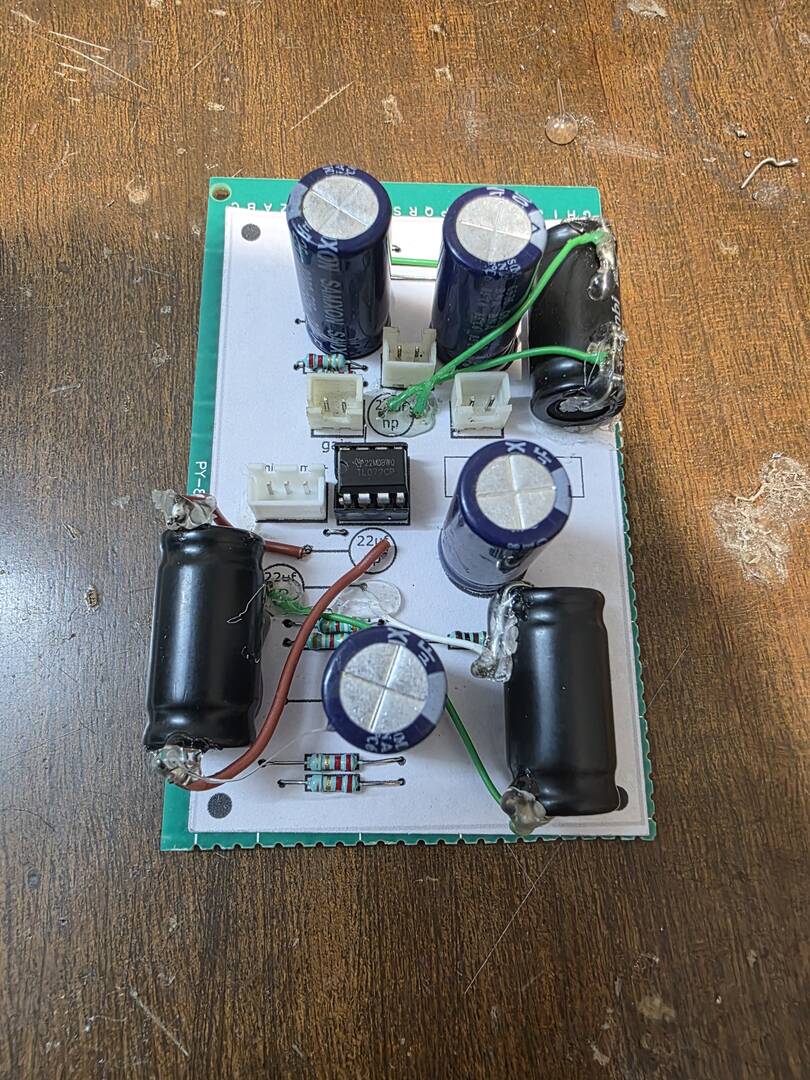
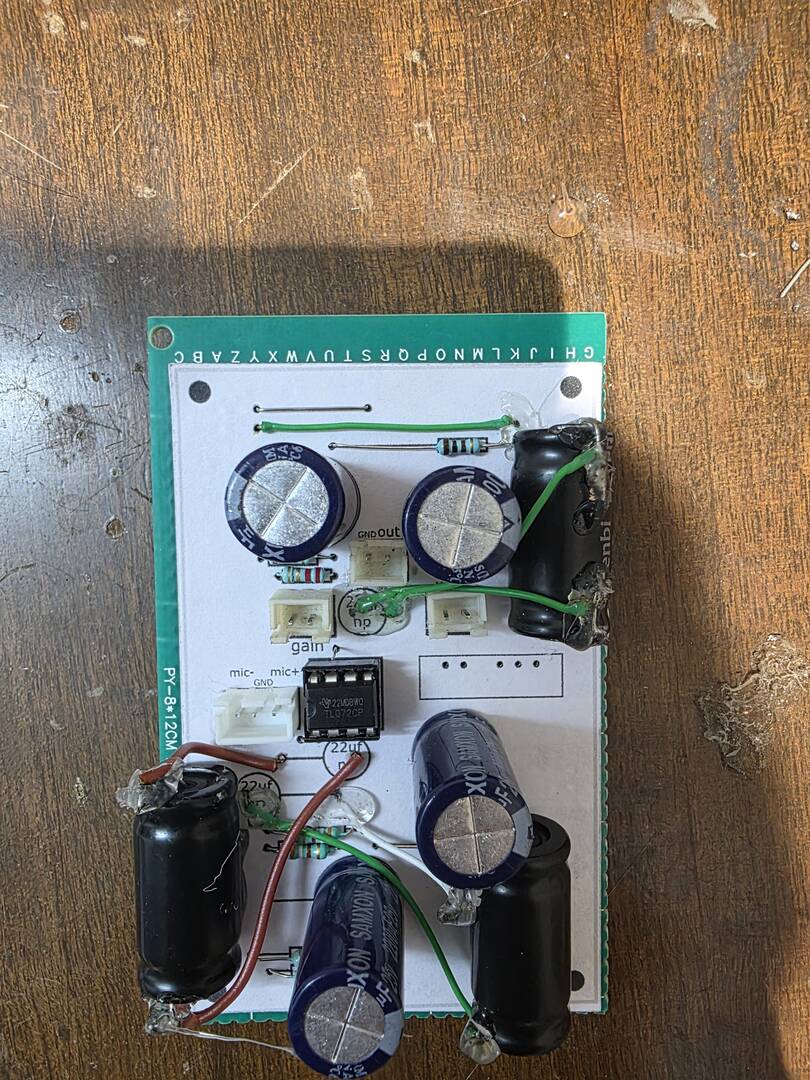
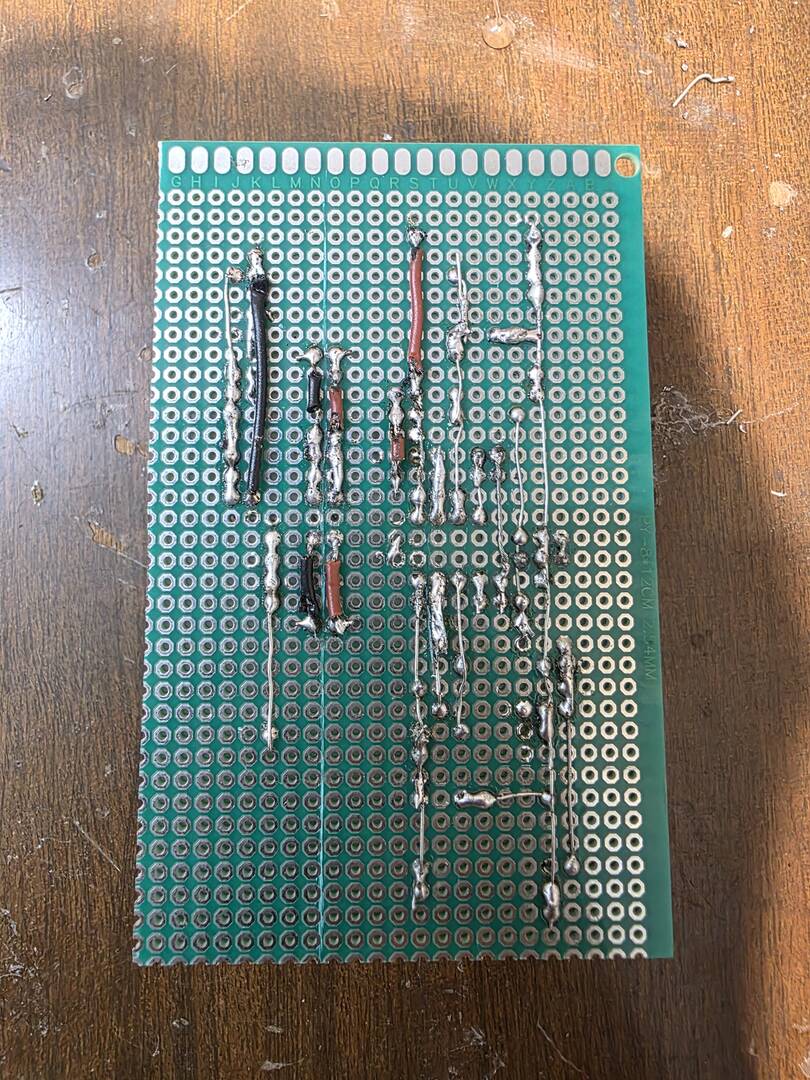
Posted : 13/05/2025 3:07 pm
Yikes! The one thing I hate more than Verboard - perfboard. You're a brave man using that stuff. The NPs aren't polarised anyway so they go in either way. Matt overengineered this bit but there's nothing wrong with that. Make it less likely that mistakes will creep in.
I've just done a version of the OPA Alice on the 34mm disc form factor I developed for this project and it has to be modified dependant on which version of the Michelle/Katie (etc.) preamps you're using. With Matt's original +/-15 differential setup, one of the caps has to be reversed as there isn't room for a non-polar setup.
I can't see how you've put the polarised caps in there from this view but if you followed Matt's layout, you'll be fine.
Take everything I say with a pinch of salt, I might be wrong and it's a very *expensive* way to learn!
Posted : 13/05/2025 3:39 pm
@marcdraco the bottom most capacitor i have doubt, i will check in Matt's video. I searched the whole internet and couldn't find veroboard. So I had to use the perf board.
Posted : 13/05/2025 4:16 pm
marcdraco reacted
Veroboard is the trade name, you would need to search for strip-board not that it matters much. Vero made (makes?) better quality boards than the nasty Chinese copies. I've made up a couple of virtual veroboards as PCBs with plenty of connections (not actual strips) that you can find on GitHub (Garrie and Claire) and even modify yourself without too much difficulty. Garrie is small and Claire has space for a single SOIC-type 8-pin chip - like the THAT1512 you found earlier actually.
Can you be more specific on which cap you're referring to (on the schematic or the board)?
Take everything I say with a pinch of salt, I might be wrong and it's a very *expensive* way to learn!
Posted : 13/05/2025 4:20 pm
@marcdraco i can't attach any photos. Basically, On the first photo i uploaded, the capacitor between two np capacitors , and that capacitor has 4 resistors , 2 on the front of the capacitor and 2 on the back of that capacitor. Hopefully it's not confusing.
Posted : 13/05/2025 4:39 pm
Not a clue. Sorry. Different if it's in front of me, but I'm hopeless at visualising this stuff.
Take everything I say with a pinch of salt, I might be wrong and it's a very *expensive* way to learn!
Posted : 13/05/2025 7:37 pm
Muzammil17 reacted
Can anyone provide me the dimensions of the brass strip used for the capsule.?
Posted : 16/05/2025 1:18 pm
@polaryetti OKK, What was the brass thickness? EDIT: and the holes size.
Posted : 16/05/2025 1:58 pm
@muzammil_wang
Brass sheet - 1mm
Diameter of holes - 3mm
Hole spacing 1.5-2mm
Posted : 16/05/2025 4:55 pm
marcdraco and Muzammil17 reacted
Hi all)
I bought SSM2019 amplifier on aliexpress, it arrived properly packed in an antistatic bag, it looked promising.
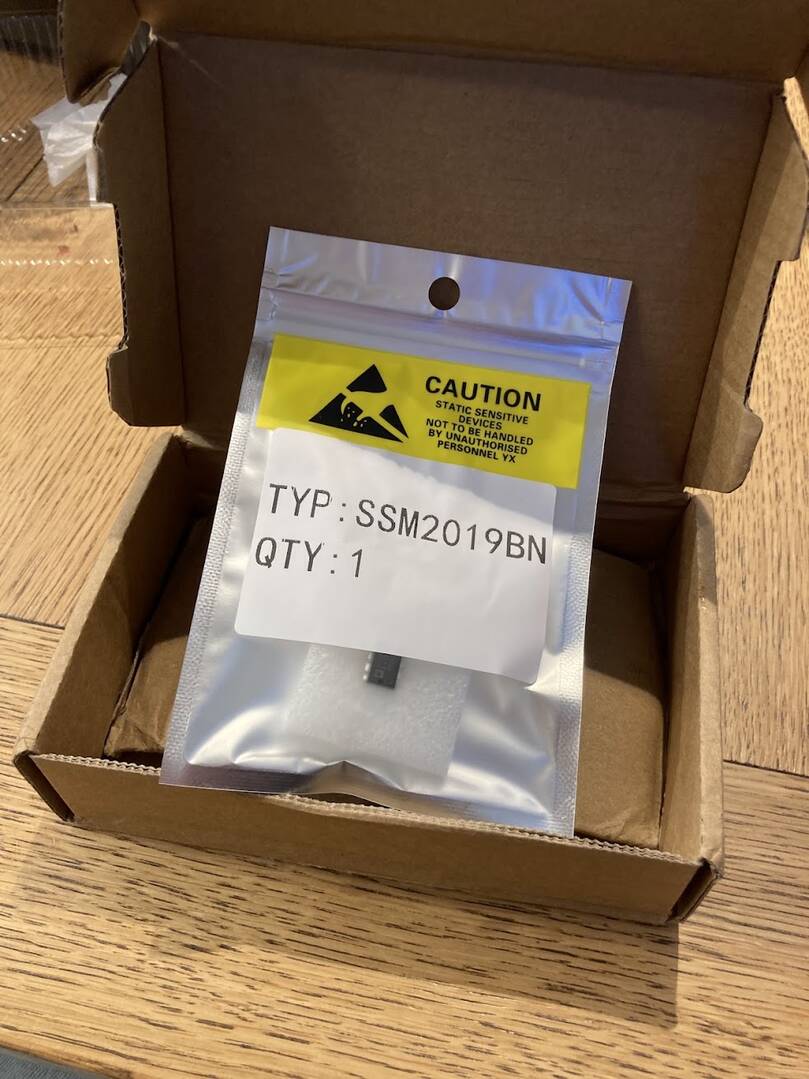
Previously ordered another THAT1512 on Mouser from USA, I will wait for it too, but I needed to make sure my circuit works.
So after searching and discussions in GPT (ahahahahaha) it was decided to order SSM2019 in the same Chinese, after two unsuccessful orders of THAT1512 which turned out to be fake (I proved it and returned the money).
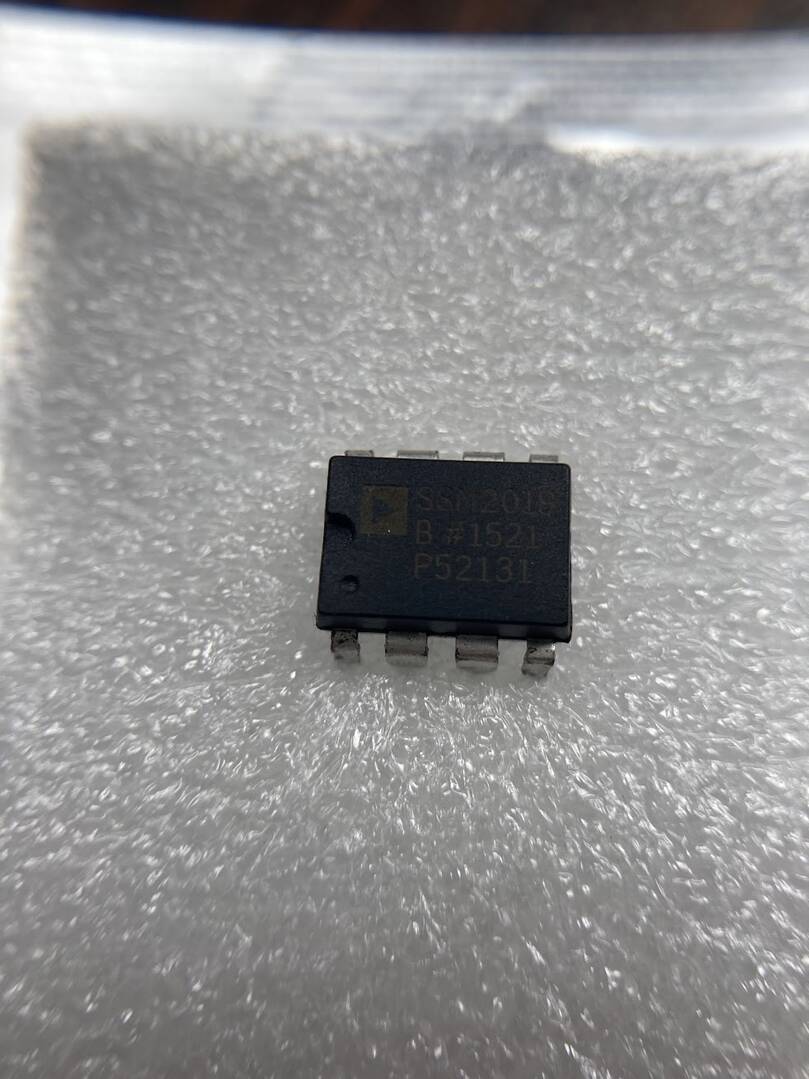
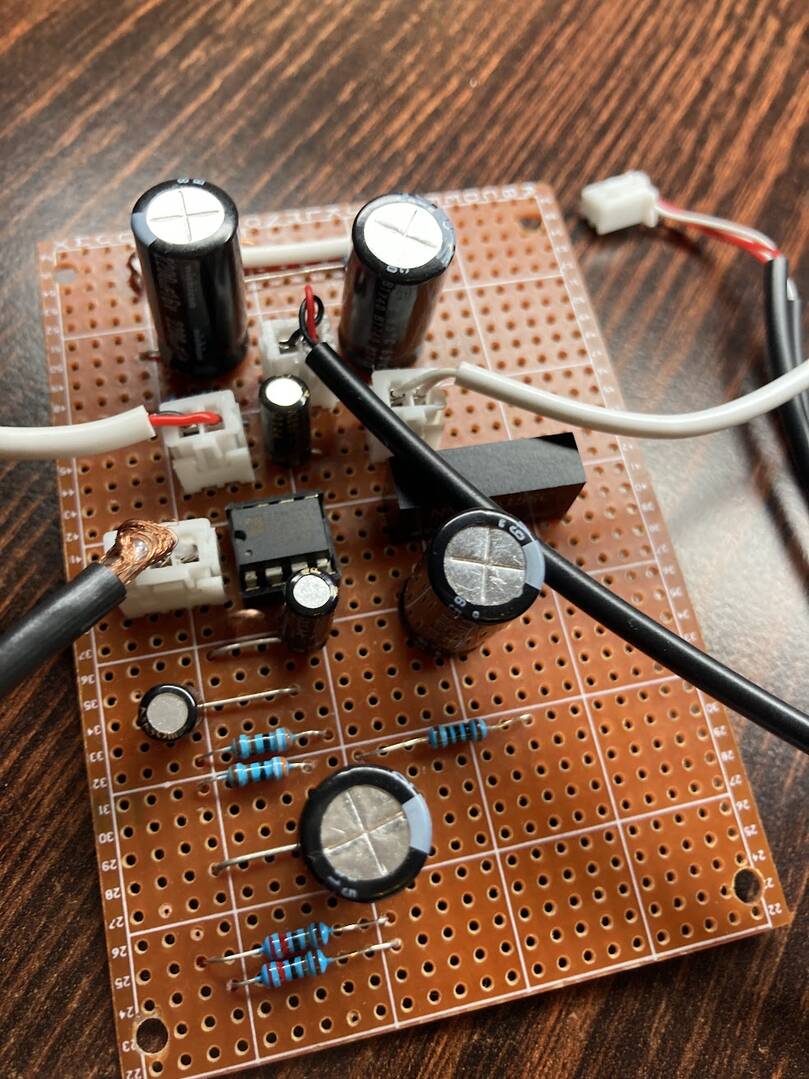
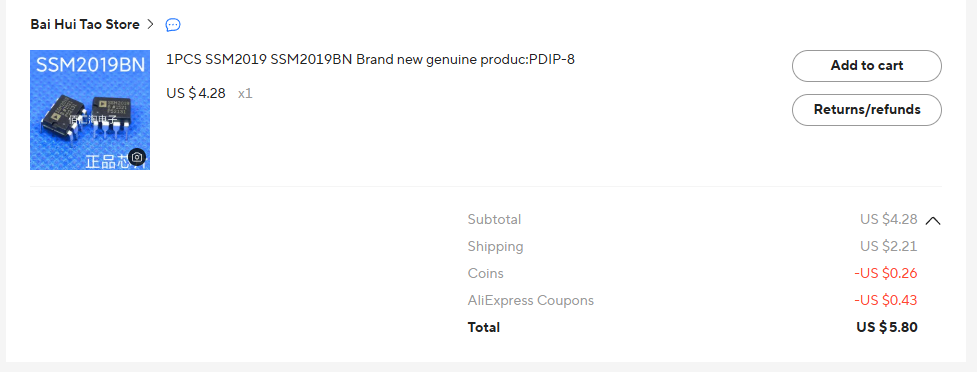
In the end, the chip was WORKING, it was the original chip and the result is more than good, considering that it cost 5.80$.
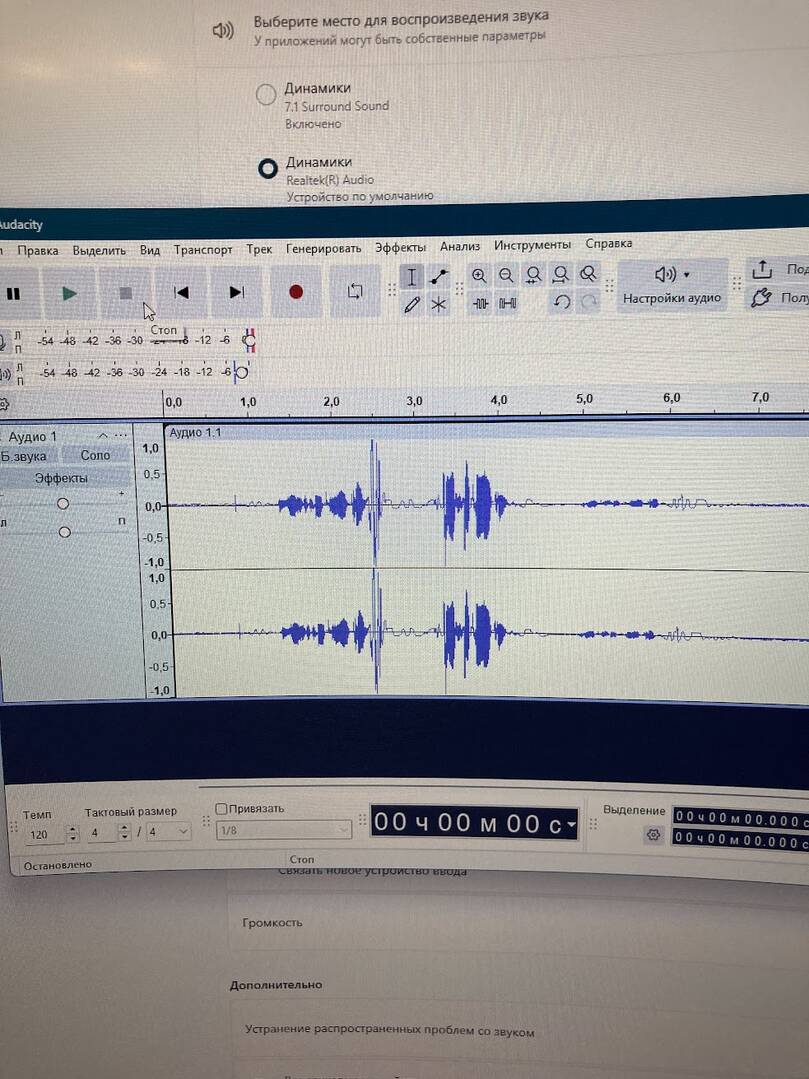
I attach an example of the record)
Yes, it has noise, I think it's exactly a matter of the SSM2019 itself, but it works fine in this circuit without modification
Posted : 25/05/2025 5:00 pm
Muzammil17 reacted
.... PHEEEEWW!
I knew it worked on paper but as I read down the post I was half-expecting you to day that it didn't.
Now that's what I call burying the lede but with an excellent way to maintain the thrill!
Well done PolarYeti, it's a great chip and actually one we should have thought about as an option. There are several around but not all INAs are capable of A/F stuff and top out at a few KHz (they're meant for very slow moving signals).
Congrats on a successful build. I'm delighted for you - there's nothing quite like making something yourself - and from scratch too!
Take everything I say with a pinch of salt, I might be wrong and it's a very *expensive* way to learn!
Posted : 25/05/2025 5:05 pm
PolarYetti reacted

Hello brother! After a long time, I can finally focus and work on this project again, as I already bought the necessary components. I'm currently checking out your GitHub account, and what caught my eye is the Bobbi_Integra; it's the most compact version I've ever seen among all the files!
I just wanted to ask (I don’t want to make the same mistake of printing another PCB without asking haha) if you’ve tested it yet? I saw in your description that you’re still validating some fittings, especially the capacitors.
Thank you!
Posted : 28/05/2025 1:58 am
Well there is some news coming out of the foundry here. 🙂
I've just (as of a couple of days ago) completed the final modules for the V2 "Pro", with sensitivity boosted by a factor of more than 2x (equivalent to around 13-16dB) for free which is, if I'm honest something I should have done looong ago. It's not on the GitHub as yet because I'm working on doing SMD and Through the Hole versions. As the design is quite mature now I have fewer concerns that something will go "poof".
One interesting thing to come out of these developments (behind the scenes) is a 48V generator to drive unpolarised capsules (the ones that people seem to drool over).
I even had a digitizer built up until I discovered that the chip is EOL, so I've had to switch it up for something more recent. There's also a nice little desktop 3W per channel speaker amplifier that came out while I was experimenting. It's nothing new, but my module uses a 2.54mm (1/10th") pitch so it's a lot easier to solder the jumpers with a standard, low-cost iron.
The new digitiser is either on-board or stand alone and can even drive an albeit simplified version of the V1 - at 5V no less - without the expense of a balanced line. Quality is excellent on paper too.
Matt (@diyperks) hasn't got these yet as I'm more rigorously testing the complete board which is compatible with the original brass-encapsulated head, but still has that 10+ dB gain improvement and lower power draw.
A side-project (and that's all it is) I'm tinkering with right now (I need parts in DIL format to experiment) uses a technique more recently seen in SDR radio called the Tayloe mixer. Which seems to be a development of Peter Baxandall's 1960s patent, but I don't know if it was developed based on that or Dan Tayloe developed it in isolation.
Traditional RF mics (and by RF I mean internally they use RF to decode the capsule signal) are expensive and difficult to set up so the idea never really caught on. Finding Baxandall's paper isn't exactly easy on the search engines either, not to mention the weird 1960's transistor symbols. It's enough to make your brain itch.
Putting that aside, it looks (on paper) to be possible to use one half of a Tayloe mixer to decode the mic and produce the "I" signal (a full SDR decodes I and Q at minimum) but it appears that the I signal is all we need to decode a capsule. This is all highly theoretical for now and although it can be done with a microcontroller (like an Arduino) I'm working on a more discrete design for ease of construction. As we know the RF frequency ahead of time, the Tayloe mixer front end is greatly simplified. It replaces the phase sensitive switch of Peter's design with an analogue chopper. Tayloe's paper is surprisingly accessible in this regard.
This paper ( https://www.pa3fwm.nl/technotes/tn17c.html) demonstrates how it works without too much complex math so it's more accessible. Dan's original paper, which I do have somewhere, is also quite clear on the design and its limitations.
If I can get this working; a big if but it's worth a try, the main advantage is there's no need for a complex screen so you have more and simpler options for mounting almost ANY capsule, provided it doesn't have a JFET internally. Audio performance is expected to be anything from very good to superb. But as I've said, this is all assuming I can make a functional prototype. This will also work with Matt's original capsule design although the JFET would have to be removed and there's a question of how much moving the cable would affect the sound as this thing is effectively measuring the capacitance of the capsule as it changes due to sound pressure.
Take everything I say with a pinch of salt, I might be wrong and it's a very *expensive* way to learn!
Posted : 28/05/2025 12:09 pm
renzevan and Muzammil17 reacted