
Notifications
Clear all

"WE"
I'm just playing with the electronics, it's nothing without that beautiful body Matt! 😉
Take everything I say with a pinch of salt, I might be wrong and it's a very *expensive* way to learn!
Posted : 17/04/2023 6:20 pm

For anyone following along with these occasional updates here's my latest and (by simulation, anyway) quietest design yet. This uses a lot of circuit tricks that I've learned along the way to improve things even beyond what we're used to, such as paralleling two FETs for a 6dB reduction in noise voltage. You can use more but the effect drops off quite dramatically a bit like the inverse square law.
The 2SK170s are an example of what you can use, but any low-noise FET like the LS389 and LS489 should work well, but ensure that the current source FET is capable of drawing more current than the pair can demand, so typically the A-grade ones are best. There are other solutions which work and may be better and I'm working on those now.
This head design is intended to fit into a very restricted space (about 1" diameter circle) hence I've kept it fairly simple as it's a direct replacement for Matt's original single FET with vastly improved performance.
The final ones will be available in kit form with all the nasty little SMD parts pre-fitted so all you'll need to do is solder in the through hole parts and you're good to go. This is V4.0 the others are back from production but are too costly or too difficult to produce at home. I'm testing a slight variation at the moment which may (or may not) perform marginally better.
If anyone wants the PCB designs for the earlier ones, just drop me a PM.
will it go with the bias circuit i made ?
Posted : 17/04/2023 10:18 pm

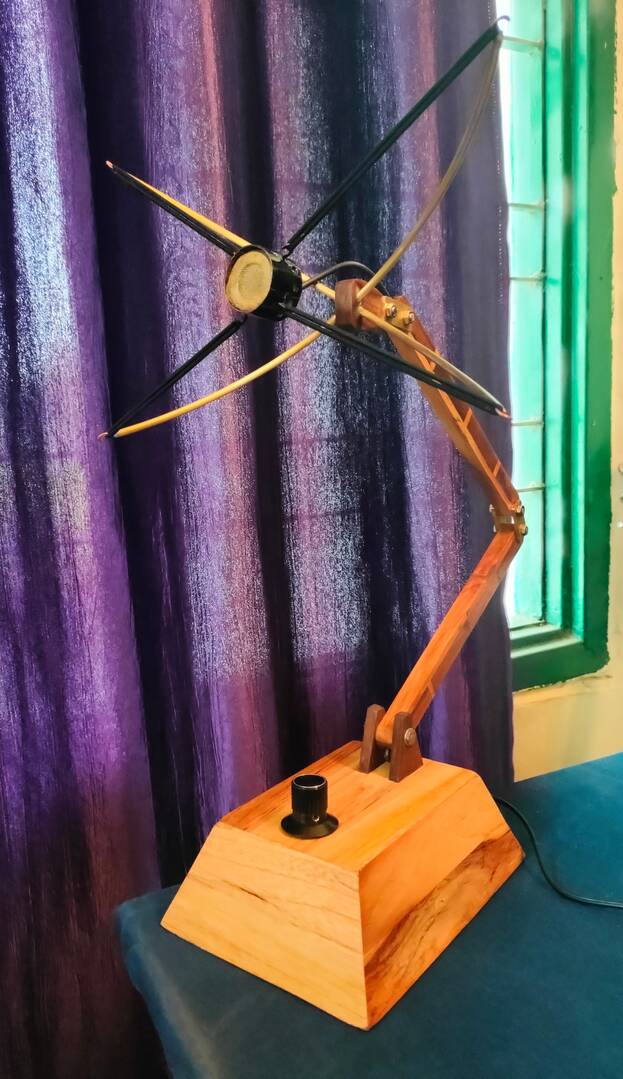
This is my last post here, Thanks everyone for your help, i've completed the build and it works amazing for what I need. Quick recap: 3D printed body, 1k ohm gain potentiometer with minimum of 25ohm (locked to 25 minimum because of a strange behavior never solved), aux output just in case & mute button.The upper part has the same dimensions of Blue Yeti microphone so it can accomodate the pop filters (that I've poorly cut)
The usb-c in this case is amazing cause I can record directly with my Samsung S8. Some photo & audio test atached.

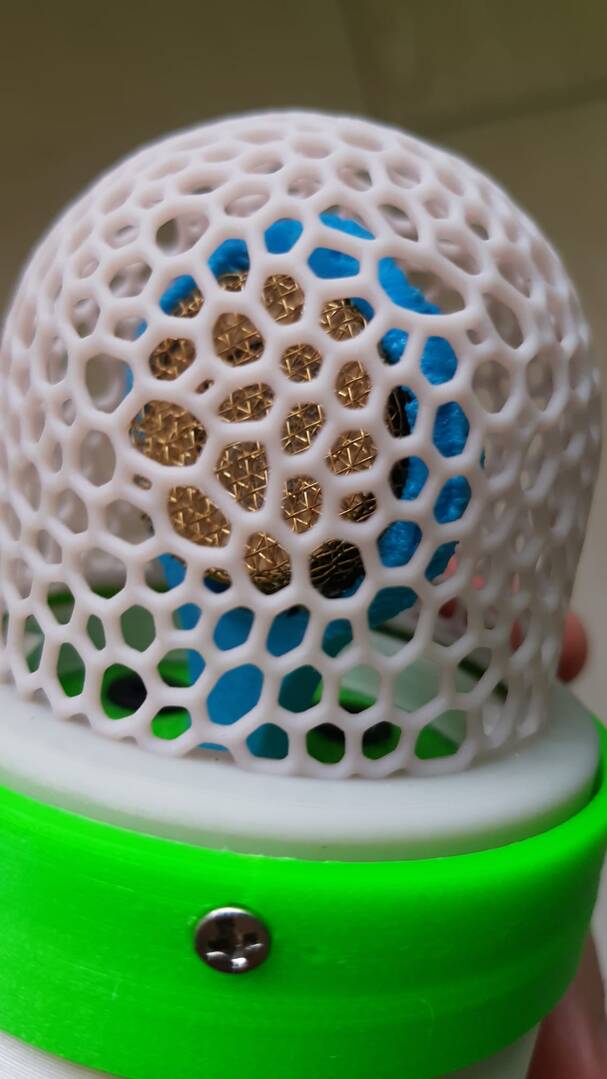

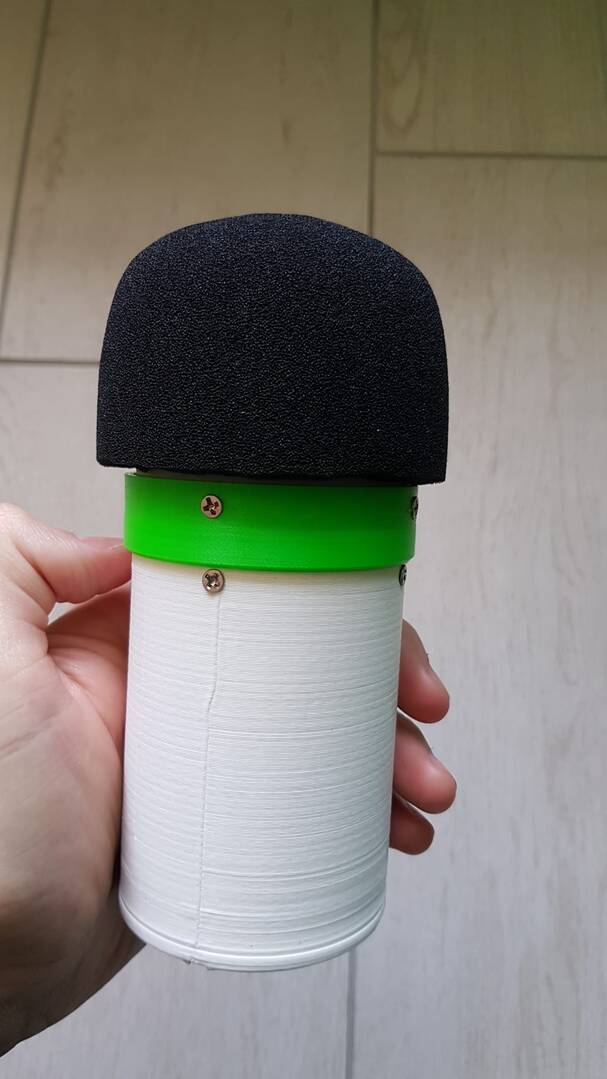
If you hear some strange popping noise or other artifacts in the audio is normal, they are generated from whatsapp compression (that I use for exchange the file more easily)
Let me know if someone is interested in the Cad files that maybe I can share on thinghiverse or others
@vertom17 LOVE IT! Well done. That looks really sweet.
Take everything I say with a pinch of salt, I might be wrong and it's a very *expensive* way to learn!
Posted : 18/04/2023 10:47 am
Oh rats @vertom17, I forgot which USB adapter did you use? We all need one that works well with this build until I can (if ever) get around to making a 16-bit one for us.
Take everything I say with a pinch of salt, I might be wrong and it's a very *expensive* way to learn!
Posted : 18/04/2023 10:52 am
@marcdraco i've used the one that is present in the video https://www.amazon.it/dp/B07BHGWBFY?ref=ppx_yo2ov_dt_b_product_details&th=1 . I've burned one for error and re buyed the same one. A friend of mine completed the same build as me 2 days ago but maybe because of the shielding is not quite the same
Posted : 18/04/2023 11:08 am
@shmuel_m That one is fairly low voltage (the final design for this build shown below needs a regulated voltage to operate at lowest noise) but it will still need about 4-5V in order to creep into saturation otherwise it will distort. Impossible to know unfortunately how bad that would be though, it's one of those things you really need to make on a breadboard and test it.
The lowest noise one I've done is this baby but it requires a regulated supply to work at optimum performance (I've done the supply but that's a separate circuit). The reason for this is that the LS389 - and ONLY the LS389 which is a dual FET performs best at at a drain-source current of just 2mA per transistor (4mA in total). You can see this on the data sheet where it's hidden in the performance charts. One of the other ultra-low noise FETs from Linear (the LS489) for example, needs 4mA per device at 15V to deliver its lowest noise figure. I expect there will be some wiggle in these figures but this should give Rode a run for its money. My pre-amp design has analog out so you can use an external device.
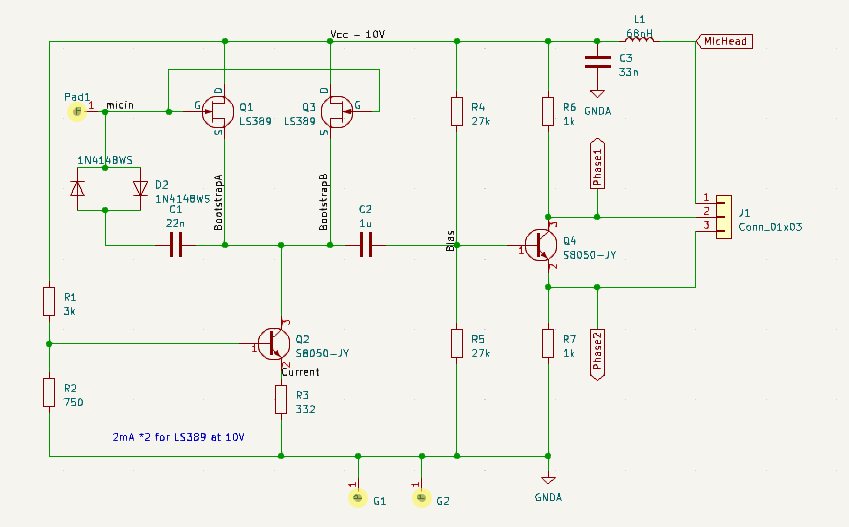
For the LS489 at 15V, R1 and R2 work out at 3K3 and 510R for and R3 is reduced to 165R to deliver the 8mA "tail" current.
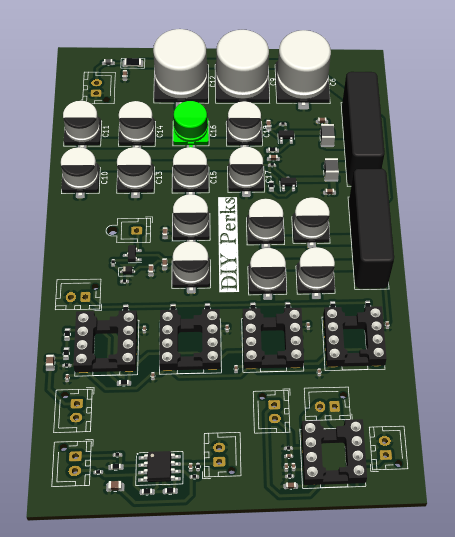
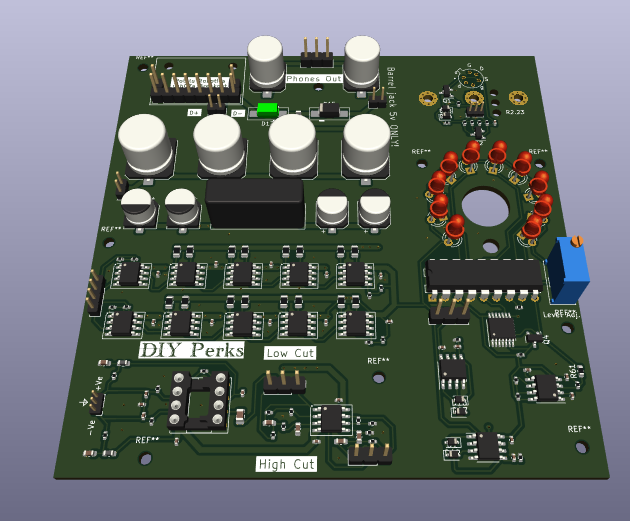
And for everyone else following this is a rendering (albeit incomplete and unfinished) of the new pre-amp featuring uncommitted positions for the THAT1512 but adding (optionally) NE5532s and a headphone amplifier. This is still in alpha stage as of this writing as I keep adding bits or improving them but it's close. I'm getting us the best possible value for money by "rolling our own" THAT1512. Obviously (if it's not obvious) I can't get close to the performance of a dedicated piece of silicon, (6nV vs. <1nV of input noise), but it's that's very low noise and drops right into an 8-pin DIL socket.
This post was modified 3 years ago 2 times by marcdraco
Take everything I say with a pinch of salt, I might be wrong and it's a very *expensive* way to learn!
Posted : 18/04/2023 11:10 am
@vertom17 Something is wrong with that link - probably to do with the way Amazon do it. A screenshot or even the part number would be great if you don't mind. I'd like to incorporate a daughter-board into my PCB if that's practical. Anything to make this beautiful design easier for people - and thanks for sharing your body! That gives off a real "blue yeti" vibe and I suspect sounds better too!
Take everything I say with a pinch of salt, I might be wrong and it's a very *expensive* way to learn!
Posted : 18/04/2023 11:14 am
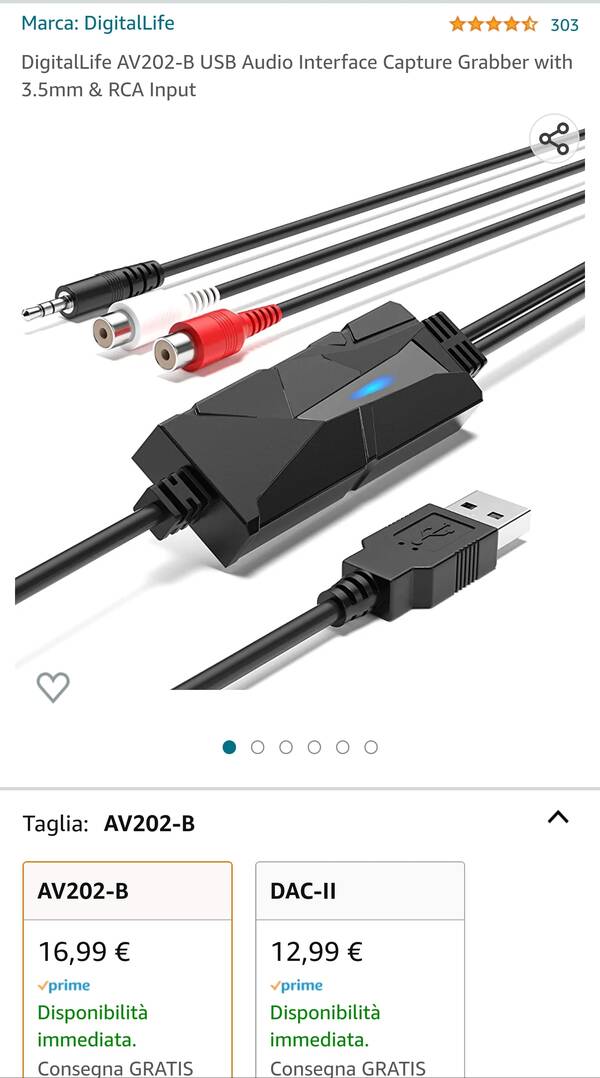
that's the audio interface. I think that is exactly the same as in the video tutorial, maybe a newer revision because inside of it the cable it comes with are not shielded so good as in video, the internals seems pretty much identical, same cable color, same pad position, same shell ecc. Sorry if i don't have other info about it, i'm actually try to avoid re-open the mic for other photo because i seriously doubt I can close again so easily hahaha
Posted : 18/04/2023 11:45 pm
marcdraco reacted
Understand that completely. But it's better if I can get this more integral in the design if that's possible.
So I'll grab one of those now. Thanks!
Take everything I say with a pinch of salt, I might be wrong and it's a very *expensive* way to learn!
Posted : 19/04/2023 12:02 pm

Hi, I want to build a DIY Mic in the future and i was wondering if there is a way to make it compatible with the creative sound blasterx g6 amp that i'm using. It can probably make the Mic sound better too, i don't know.
Thanks for all your hard works guys, I can't wait to see more prototype and idea on this forum
Posted : 08/05/2023 8:42 pm
That was timeley @xugo!
I'm just finishing the design for the upgraded version of Matt's original and one of the things I added was what amounts to an XAmp (as Creative call it) for the headphone out. That's right, under Matt's guidance this one has a headphone output now too.
But we hadn't considered an audio out - in effect a line out from the buffer stage so I'll included one now before I ship the boards off for production!
Take everything I say with a pinch of salt, I might be wrong and it's a very *expensive* way to learn!

That was timeley @xugo!
I'm just finishing the design for the upgraded version of Matt's original and one of the things I added was what amounts to an XAmp (as Creative call it) for the headphone out. That's right, under Matt's guidance this one has a headphone output now too.
But we hadn't considered an audio out - in effect a line out from the buffer stage so I'll included one now before I ship the boards off for production!
Very curious as to what the final design ended up looking like. Does it still have the variable gain that the original design had? I would personally love that feature for when I use an external ADC.
Seeing that it has both a headphone out and a line out seems very interesting. That could make it so that I only need one USB port to handle the headphone, speaker and microphone.
Now I'm thinking about trying to make it so that it can do an analog headphone out, directly from the microphone, as well as a headphone out from your PC.
Posted : 09/05/2023 11:52 am

Yep! Should be out maybe in April.
Super excited to see it (though it's a bit after April now, but no pressure)! Hoping to watch that upload soon since I was starting to plan my build, order parts, and spend my summer working on it.
Also, could anyone suggest a US alternative for Bitsbox since that company is based in Europe? I've been looking at purchases three different stores (Mouser, Digikey, and Rapid Online) for the parts used in the vid, so I was wondering if there is a singular US-based store I could buy electronic parts from instead.
This post was modified 3 years ago by Lamechial
Posted : 10/05/2023 1:21 am

Hi @diyperks
Shyam here from India. First of all, thank you so much for this fantastic project. I ordered all parts and it took me 4 months to get all parts in my hand and I spent a total 120 $(heavy custom duty fee on a semiconductor chip). I followed the steps that you mentioned and did proper grounding and shielding. Instead of using a rotary switch I used a 2K ohm potentiometer and tried audio quality at different gain but still, I'm getting a lot of electronic noise. Please help me with this, how can I get rid of that?
Posted : 12/05/2023 4:30 am
The board is in three parts (they're on a single board right now to keep the production cost down during final testing.
The mic head on this one and the amp board are compatible with Matt's original, but I have a slightly more complicated one (five wires vs. three) to power it which is quieter still. The sort of remote/phantom power Matt used is limiting for more complex designs.
The main board now has a Baxendall volume, high-quality stereo headphone amplifier, high and low cut filters and gain so acute you'll be able to hear the crickets at 1000 paces. This also reduces noise levels too since the THAT1512 develops its lowest noise when flat out. Frequency response is fairly flat (when filters are not in use) from 15Hz to over 20Khz where it's deliberately rolled off.
It has USB and 5V power (you really need a wall wart to ease the USB load in a USB 1.1/2.0 port if the headphone amp is in use).
The LEDs are a level meter with both instant (bar) and peak (dot) levels. I'm in into bed with a virus right now but hopefully the first (final) prototypes will be back soon. I can't expect anyone to order them untested even though they do work in simulation.
I don't have an issue publishing the schematic design (here are some tasters), but the PCBs are non-commercial use only as this wouldn't exist without Matt's help and inspiration.


A Baxendall volume is easier to make with everyday values and less prone to noise.
Take everything I say with a pinch of salt, I might be wrong and it's a very *expensive* way to learn!
Posted : 13/05/2023 1:49 pm
Lamechial reacted
@shyam That sounds like RF folding back into the audio band (it happens when you get two high-frequency signals and they interfere at sum and difference. They difference can end up being in the 20-20K range.
It's probably switching noise from a power supply. I've added bits into my design to help with this in "dirty" mains situations. You could try some ferrite beads or RF chokes in series with the power lines but be aware of the load!
Take everything I say with a pinch of salt, I might be wrong and it's a very *expensive* way to learn!
Posted : 13/05/2023 1:53 pm
Shyam reacted
@marcdraco can you please share the value of components mentioned in the schematics as it is hard to read from the images of circuit diagram
Posted : 13/05/2023 3:12 pm
@vertom17 wow, that sounds so clean, did you use the same circuit mentioned in the video or used some extra?
Posted : 13/05/2023 3:14 pm
@theguy Yes. Yes we can (in fact we have). Matt and I have some early prototypes that do exactly that although the problem is getting the 48V power to the head - it's already tight up there. I think this will need a completely separate hardware physical design. Apart from the phantom power which is a bind but a necessary evil for the really quiet mic capsules, there isn't a lot of room for the extra electronics.
I'll let Matt decide how he wants to go with that one. Everything save for a 48V "inverter" is already done and a Cockcroft-Walton multiplier is fairly straightforward. You do need 12V A/C power in though, while it is possible to get 48V and more from a 5V supply, the conversion steps mean that the losses incurred are significant. Better to start with a low-current A/C source and work up.
Take everything I say with a pinch of salt, I might be wrong and it's a very *expensive* way to learn!
Posted : 13/05/2023 4:23 pm
Lamechial reacted

Do we have any ETAs about when the video will be published? I want to build the mic but if the new model is gonna release soon, I think it would be better if I wait.
Posted : 14/05/2023 7:22 pm
@shyam I expect they will be better viewed as PDFs or on GitHub. These are really just proof the thing exists. 🙂
I'm moving the level meter to a different project due to the cost of parts at JLCPCB - the mulitplexer is quite expensive (relatively speaking) so it makes things expensive to just get a couple of prototypes.
Although I haven't built one yet, I'm fairly confident it will work (... what's that about "famous last words?")
The impedance converter (mic head) works a treat although as Matt has demonstrated with his design there was no need for the load - diodes in my case, usually a 1Gig resistor.
The current sink is a bit of a issue still. The choice of the NPN transistors is not critical, so long as they are low noise - BC109C, for example, would have the same effect. The ones here are just something I can get in surface mount (SMT).
The crucial part in this design is the LSK389A, it's a dual FET (six leads in one package) such that both devices operate similarly. The main alternative is the LSK489A. Both are available as through-hole devices making them ideal for home constructers. Single devices like the LSK170 work well too (and, to be fair, are about half the price in small quantities) but offer excellent performance.
The current sink is fixed at 4mA making it 2 x 2mA. The LSK489 requires double the current for lowest noise making it unsuitable for a low-voltage circuit as the emitter resistor becomes unmanageablely small with the r(e) internal to the device of about 25 ohms contributing to the confusion. A trimpot is possible to set an exact drain-source current but the design I've adopted puts everything you see here on a tiny PCB that attaches directly to the mic. This helps to screen the high-impedance and reduces noise somewhat.
I have another design waiting to go for prototyping that might remove the need for a screen completely but that's a proof-of-concept at the moment since I'm not sure what sort of screening the actual mic body offers.
This version is broadly compatible with Matt's original design but again, I have to stress that it is currently untested. The versions I've gotten back from JLC have all used a separate power and signal which requires four leads (two power, two signal) and were designed for my own preamp.
Take everything I say with a pinch of salt, I might be wrong and it's a very *expensive* way to learn!
Posted : 14/05/2023 8:39 pm
@shyam Here's the schema for the log volume control that only needs a linear pot to work. This is Peter Baxandall's circuit from the 1980s and is revered for its utter simplicity. Peter is better known for his tone control (bass/treble) which is found in most if not all consumer amps of the time. It's still in use today in fact due to (again) the absolute simplicity.
I've included a switched version too. You can see it works by adjusting the mixture of phase and out of phase signals into the buffer stage. Really quite brilliant and with NE5532 op amps (or better) it's as good as silent for signals above around 10mV or so.
Take everything I say with a pinch of salt, I might be wrong and it's a very *expensive* way to learn!
Posted : 14/05/2023 8:44 pm
@shyam These are the filters - quite frankly, they're a bit of guesswork right now as I had to change the values to match components that weren't going to cost an internal organ...
These will work but I have't done the polynomials or simulation to see if they peak badly (they shouldn't but electronics doesn't always work as you expect when you select a slightly different value that appears "close enough" 😉
Take everything I say with a pinch of salt, I might be wrong and it's a very *expensive* way to learn!
Posted : 14/05/2023 8:52 pm
OK this is the real power hog, the headphone amp. I've limited (cough) the number of op-amps (NE5532) slightly because of lack of space on the board - even with SMD versions it's still a squish with just 100x 60 mm of space (give or take) because everything else - power supplies, filters, volume control and the pre-amp are all there too.
The only external part is the flashing-light thing. 😉
Take everything I say with a pinch of salt, I might be wrong and it's a very *expensive* way to learn!
Posted : 14/05/2023 8:58 pm
I found an error in the level meter circuit, so I've removed it until I figure out what I goofed.
It worked previously so I've clearly either dreamt it or did something different in the sim.
Take everything I say with a pinch of salt, I might be wrong and it's a very *expensive* way to learn!
Posted : 14/05/2023 10:15 pm

Just realised I hadn't posted a pic of mine. Technically it's not finished, since it's currently hanging from my ceiliing on rubber bands. I'll find a pretter solution at some point, but at least I get absolutely zero vibration, no matter how loudly I type. The rotary switch is on the back. I doubt I'll ever use it.

And here's the guitar the other half of that chunk of mahogany went into
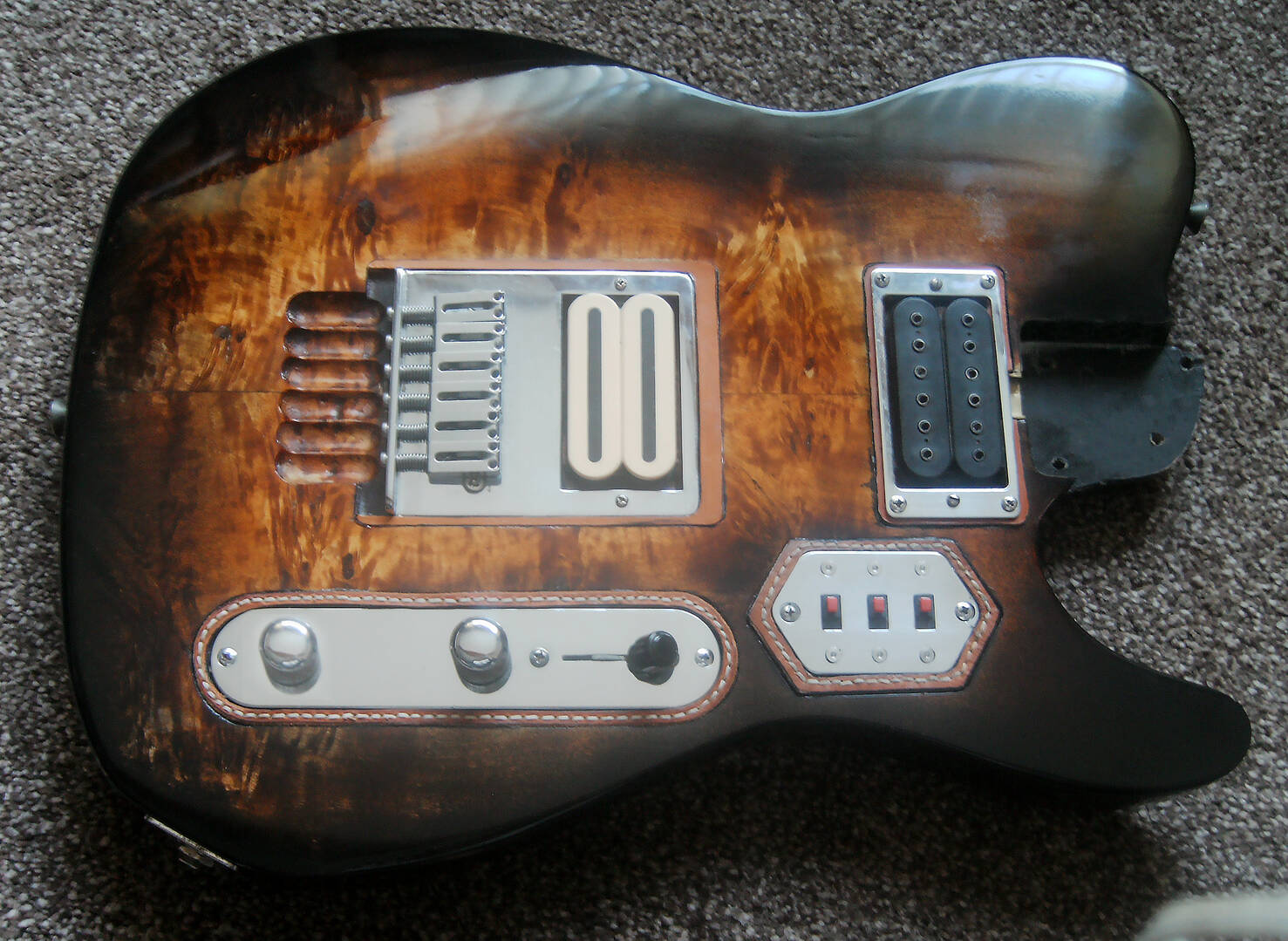
I did a quick test, too. The noise is just my PC fans. There's also a little bit of wind noise from the...well, you'll see.
This post was modified 3 years ago by Ashleigh
Posted : 20/05/2023 11:05 am
marcdraco reacted
How did you cut the guitar base? My son-in-law is trying to make one and we're having terrible issues.
That looks lush though!
Take everything I say with a pinch of salt, I might be wrong and it's a very *expensive* way to learn!
Posted : 20/05/2023 6:15 pm

Hello!! I just read through this entire thread...
@Vertom17, would you please consider posting a .zip or github repo of your stls and gerber files with the changes?
@marcdraco, would you guys be kind enough to post a .zip file (or github repo) of your gerber files?
I'm interested in re-creating either the V1 or V2 microphone.
I created the V1 microphone from the video, just to test if there was going to be any tricks. I built a proof of concept that I was happy with. But I decided to read this thread to decide what to do next. Now I'd like to build a PCB version of v1, v1.5 (Vertom) or v2(marcdraco)....
But nobody is sharing their gerber files and BOM to make it easier! Please help so that people can reproduce ur awesome works!
Posted : 20/05/2023 6:20 pm