
Notifications
Clear all

@jordiemc did you place the epoxy between the lamp and the mirror, or between the mirror and the window? Did you polish it?
Posted : 23/06/2023 7:07 pm

@fhr I made a window from acrylic and used that at the bottom layer with epoxy on top of it.
Posted : 23/06/2023 7:37 pm
@fhr I made a window from acrylic and used that at the bottom layer with epoxy on top of it.
Posted : 23/06/2023 7:40 pm
@fhr I made a window from acrylic with a layer of epoxy on top. The surface was smooth enough not to need polishing.
Posted : 23/06/2023 7:43 pm
@nolo Thanks, I wish I had space to make these for more rooms in the house.
Here's the window before installation https://photos.app.goo.gl/AfEAAoTMepqkHswy7
This is the resin pour https://photos.app.goo.gl/k7rc9rgXb7rF3VrV8
https://photos.app.goo.gl/aqTSir9ivypaoSjz6
This is how I mounted the LED with it's heatsink https://photos.app.goo.gl/TVRoiembYgGRnKLq5
I held the LED against the heatsink by sandwiching it between strips of aluminium bolted together. Then that was bolted on to a bracket which was in turn bolted to the arm of the satellite dish.
I didn't know about the waterproof inkjet foil. That's interesting, I may look in to that.
Posted : 23/06/2023 8:08 pm
timdmackey reacted
The site wasn't responding last night, but I see now it did go though. I don't know how to delete the extra posts
Posted : 23/06/2023 9:03 pm
fhr reacted
That's a very clean job, thanks for the details!
Posted : 23/06/2023 11:24 pm

This thread is incredibly helpful. I am starting small -- got a 12W 6000K led and a 300mm fresnel lens with a 330mm focal length, and the waterproof inkjet sheets, and the test setup actually works! The "sun" appears at infinity, slighrly yellowish and
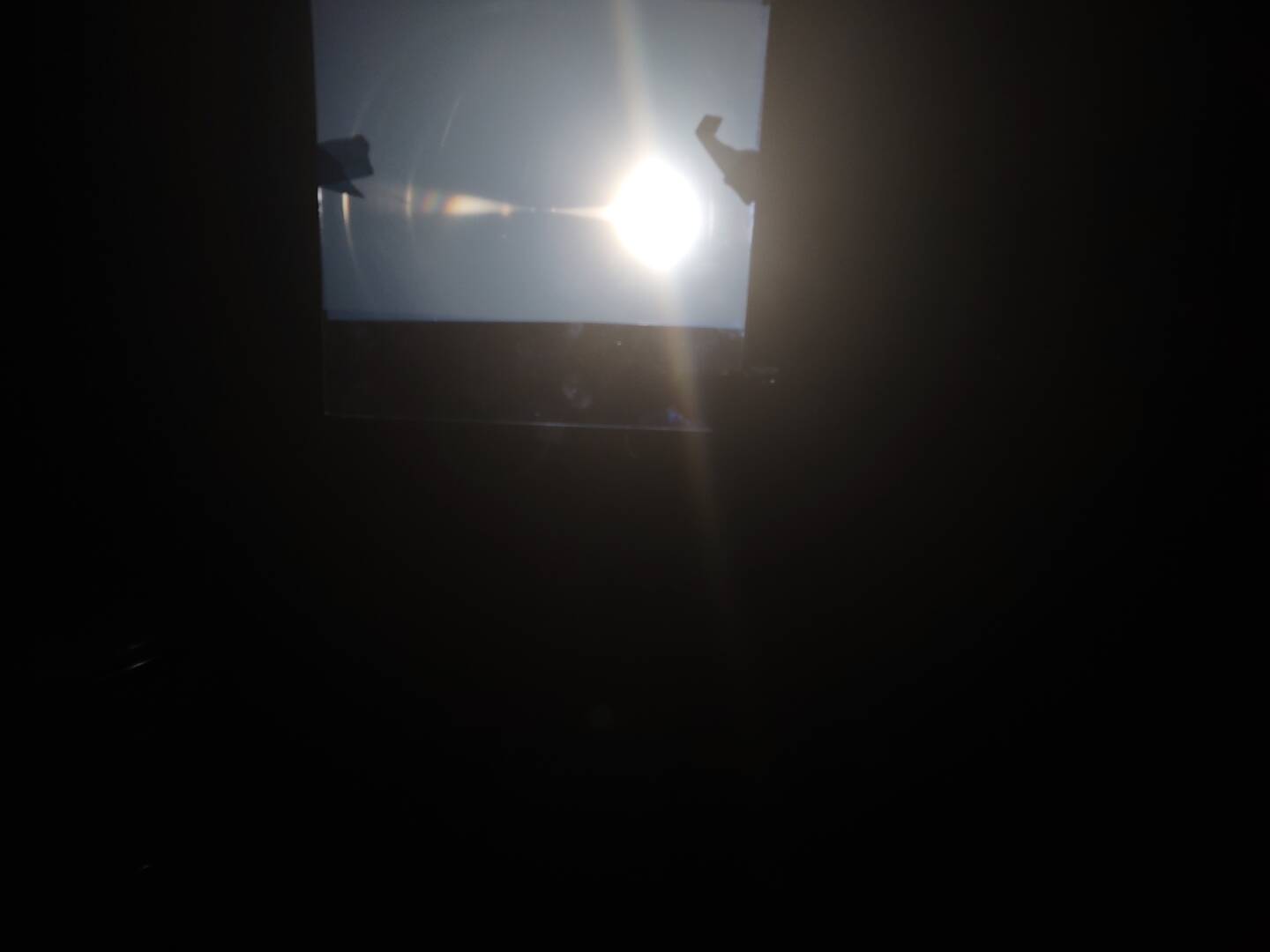

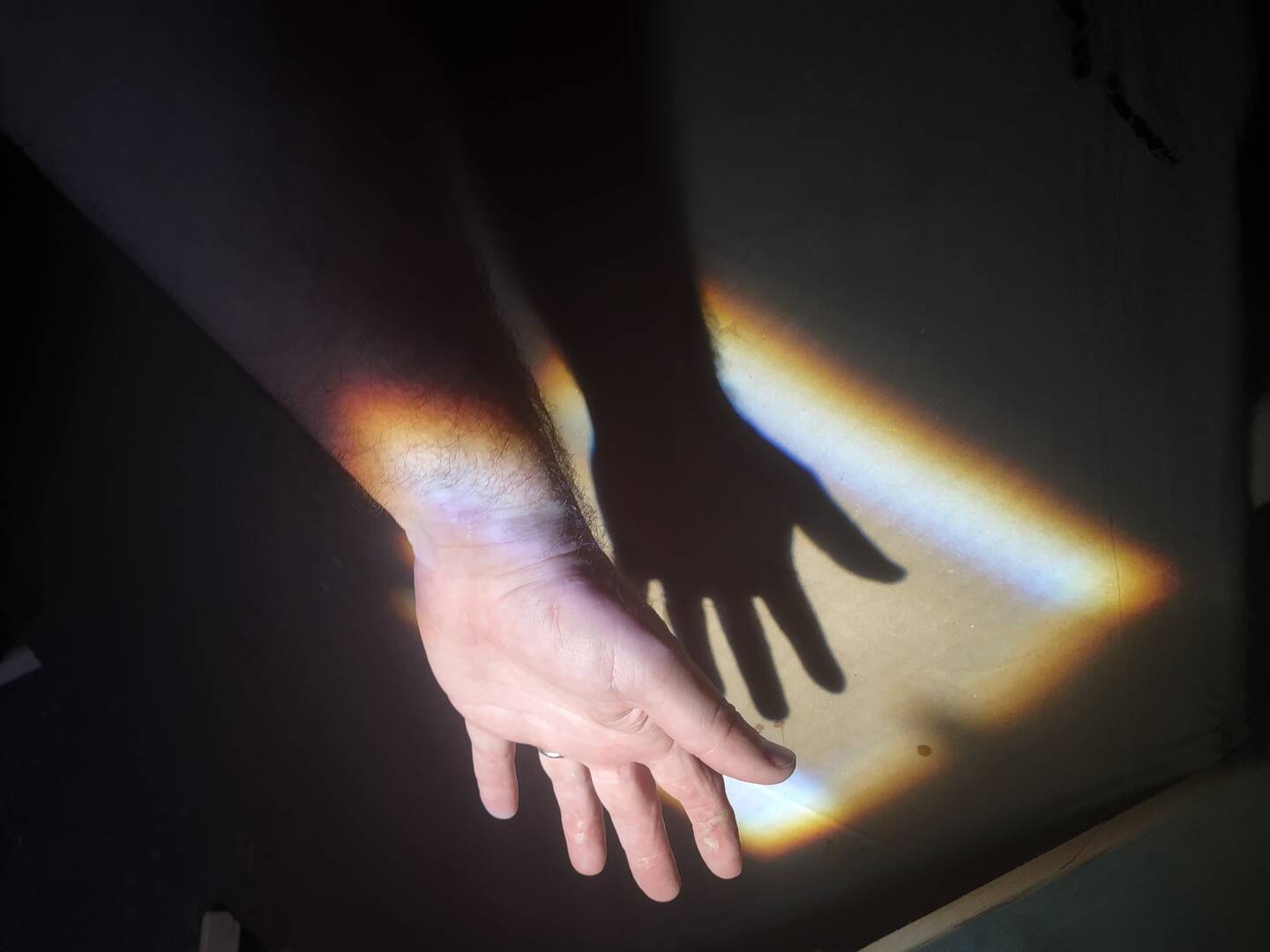
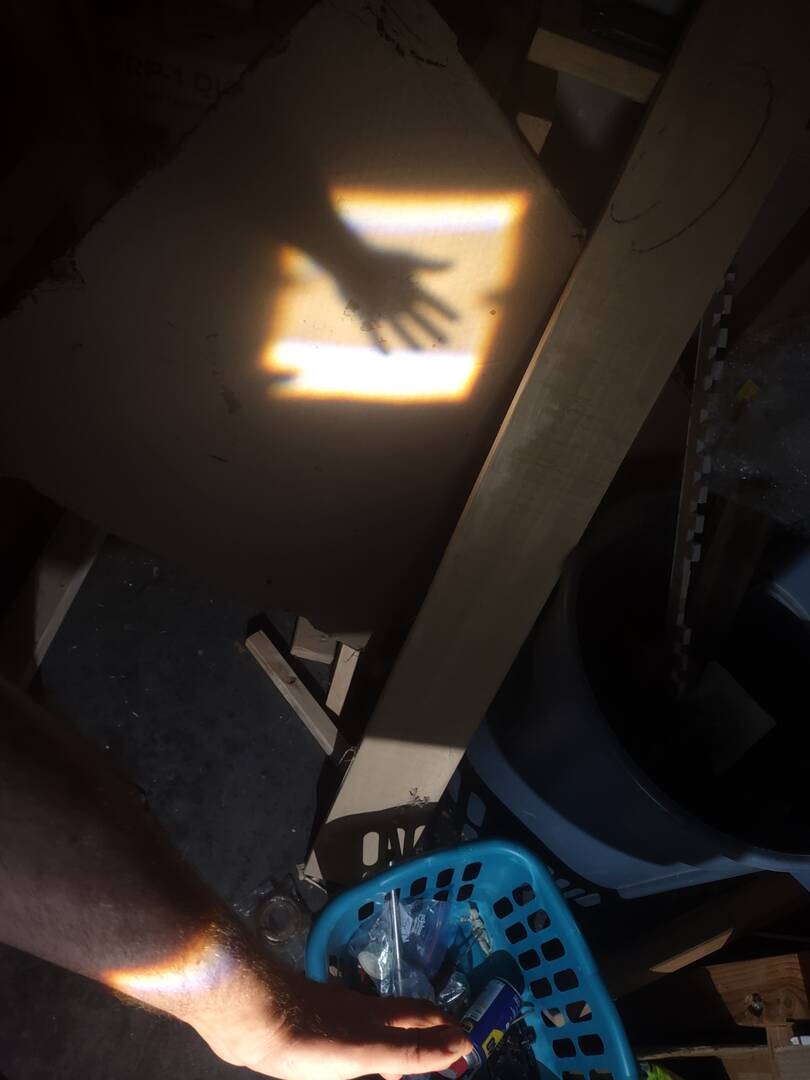
surrounded by a perfect blue sky (pictures don't quite do it justice, it is fairly realistic looking). Light is all parallel - shadows don't get bigger the further from a surface they are. Next challenges are to fold the light path with some projector mirrors to get it compact enough to fit in first floor ceiling, and deal with chromatic aberration. It's very strong with the fresnel I picked. Pics of my janky test setup in case anyone is interested:
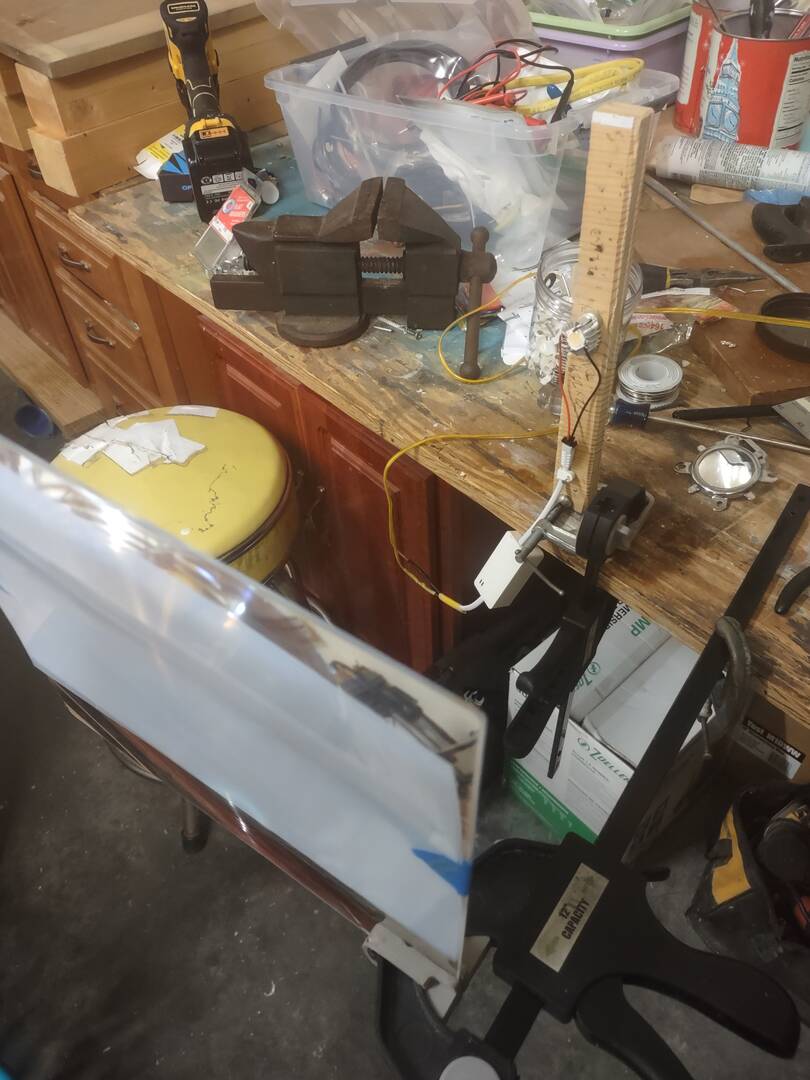
Posted : 30/06/2023 3:15 am
smjedison reacted
I made up a new window with a higher concentration of colloidal silica. It's got a stronger Tyndall effect but also defuses the light more.
https://photos.app.goo.gl/GFAfmGxtxpbLFE9b9
https://photos.app.goo.gl/t1uWLuYBqaXNaihs7
https://photos.app.goo.gl/YMgeo1CTSF7KNMZXA
Posted : 30/06/2023 7:15 am

@jordiemc that looks really good! Can you post a link for the LED or the specs of it such as the CRI, Lumens and Color temperature ?
Posted : 01/07/2023 11:27 pm

There are a lot of interesting techniques showed in this video about infrared cooling paint.
Maybe acrylic paint can be made to hold the ti particles, more easily than epoxy.
Posted : 09/07/2023 3:54 pm

So apparently I can't just let an idea sit around and not be built... lol.
My design of collimated light amplification seems to be effective, though I've only built the first stage:
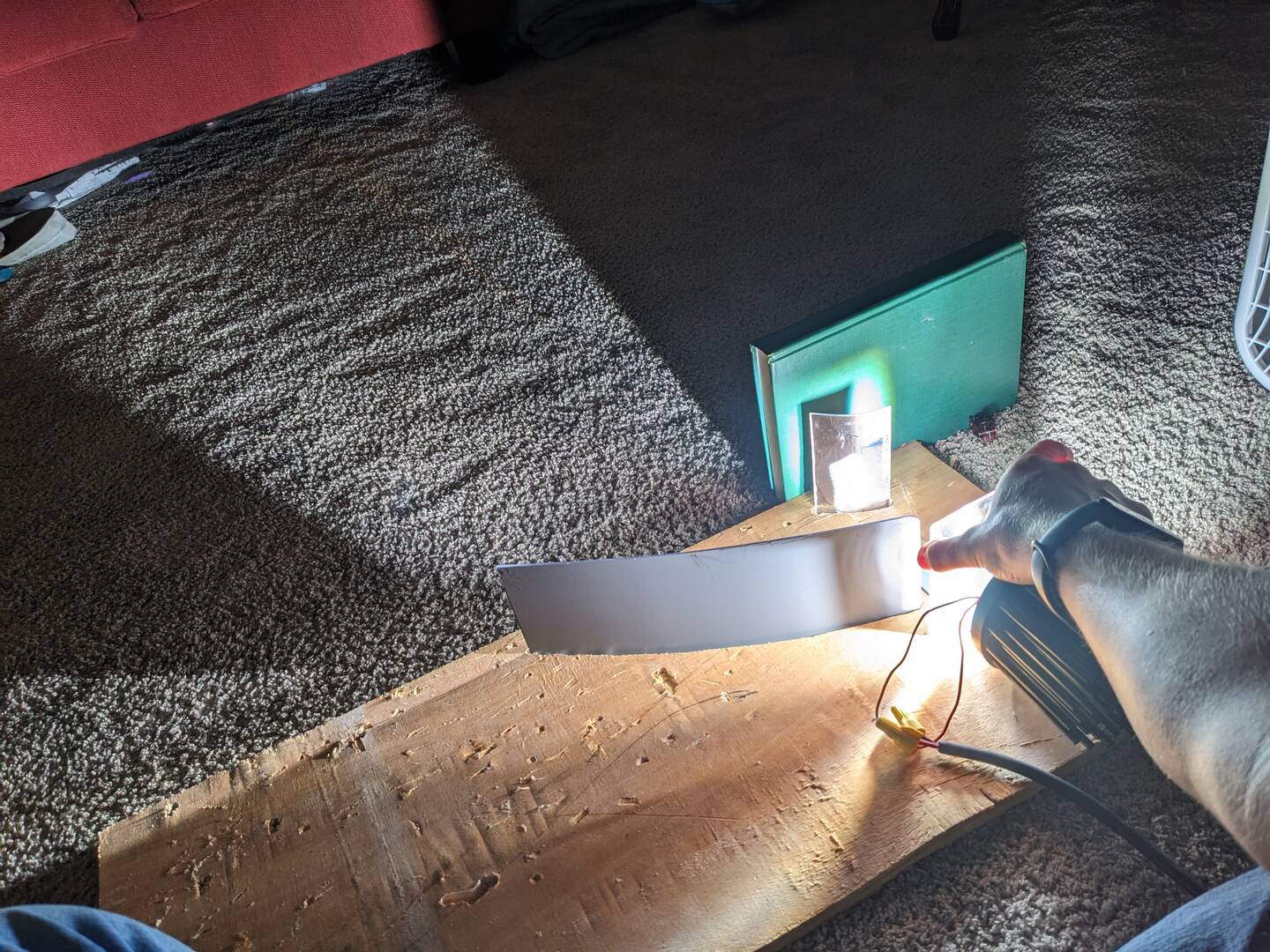
I printed out an SVG of the mirror shape, and used a router to make slots for the mirrors. I ended up using a heat gun to mould the circular reflector, as it's a much sharper bend. I cut all the mirrors with a band saw—cutting and shaping acrylic mirrors is such a breeze.
I used a fresnel lens off of amazon to focus the led (a nichia COB), which worked pretty well, but I'm thinking I might want to use a second lens to make it even more focused (you can see the beam here, there's still some divergence):
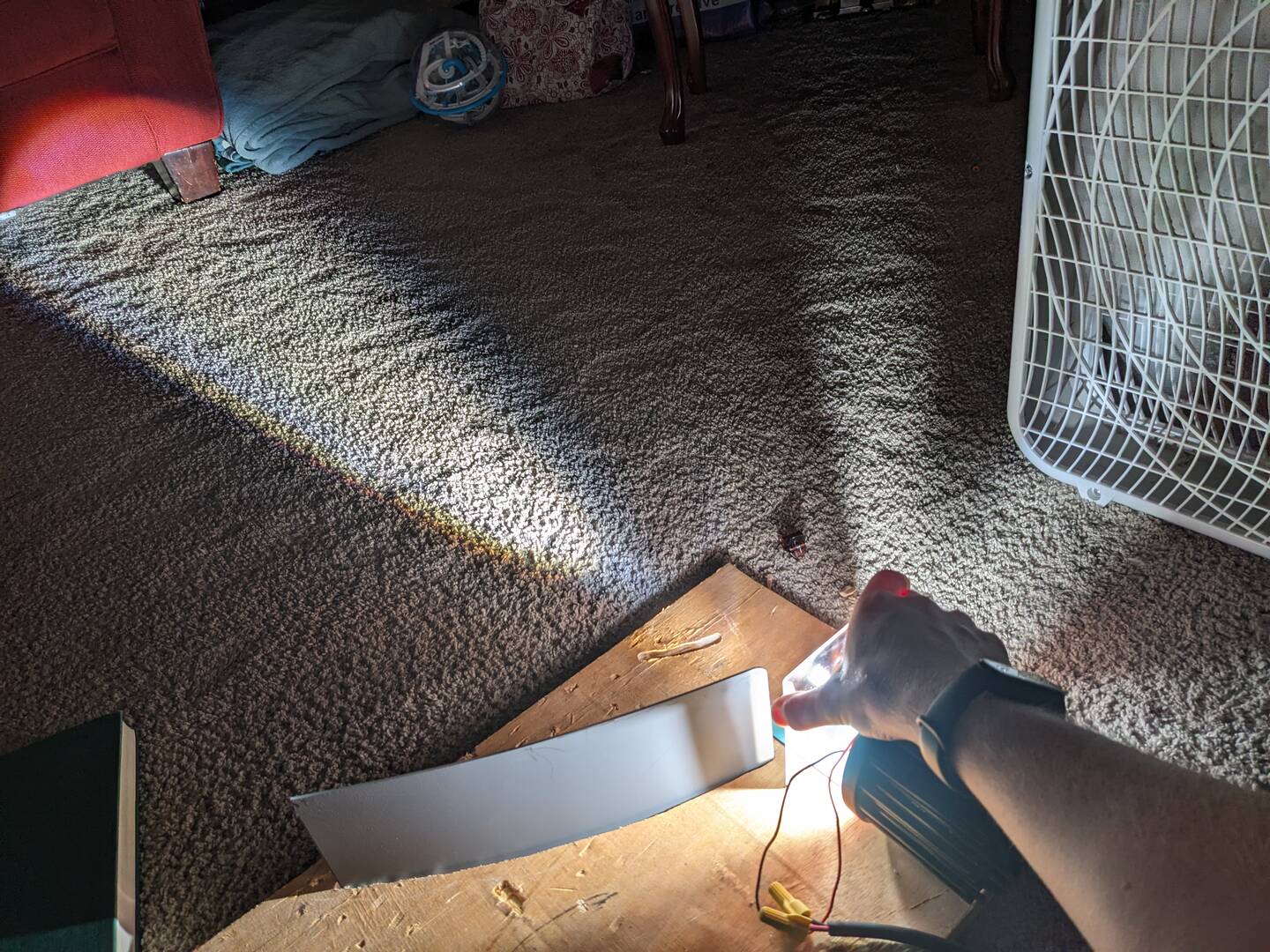
I'm planning on building the rest soon, we'll see though if I don't get distracted with some other project 😂.
Posted : 11/07/2023 11:56 pm
My design works! The final result isn't as square as I hoped, but I expect that has to do with imperfect mirror alignment. Shadows are also somewhat fuzzy, but I think that's a mirror issue as well.
Here's some pictures:
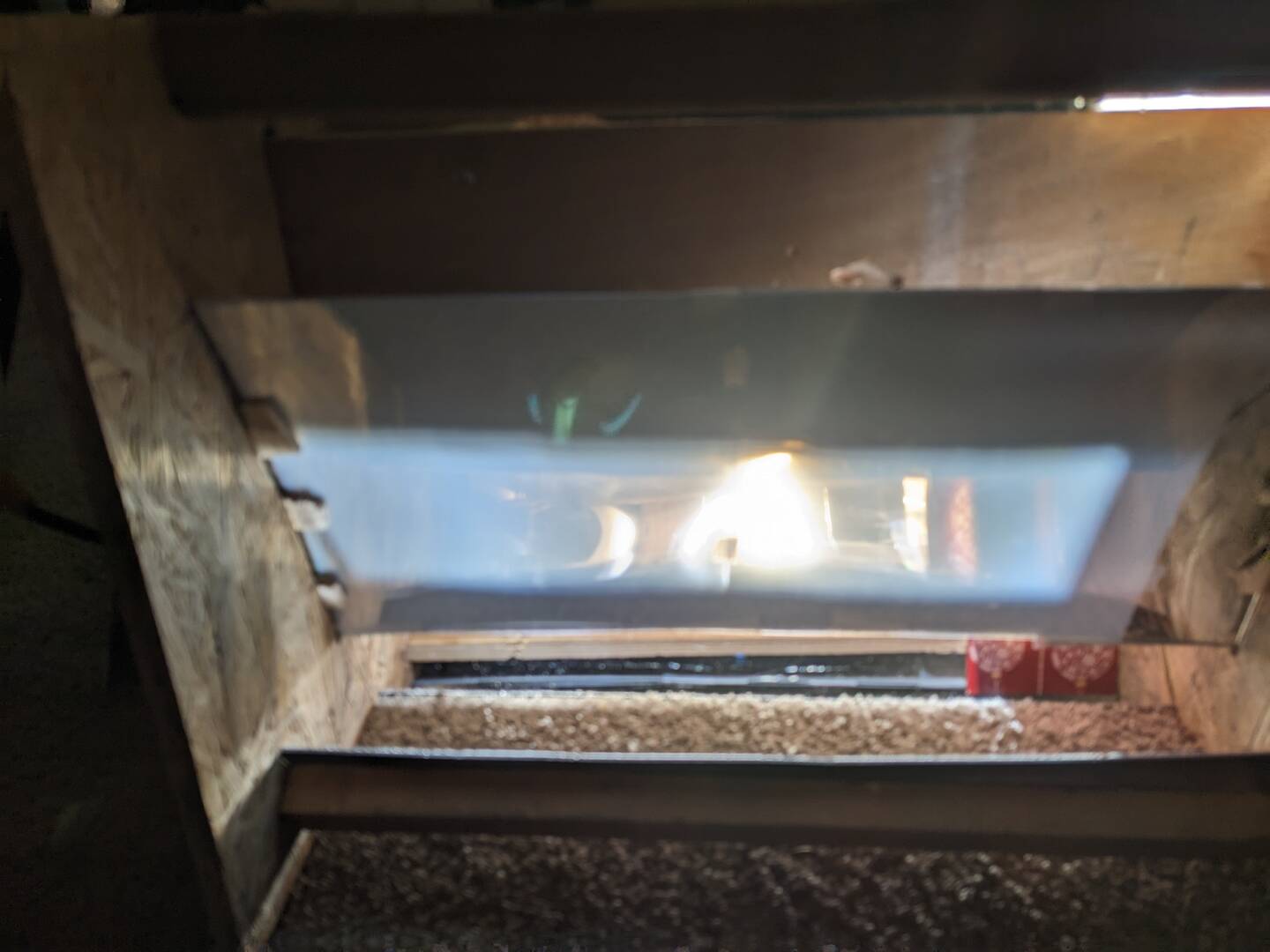


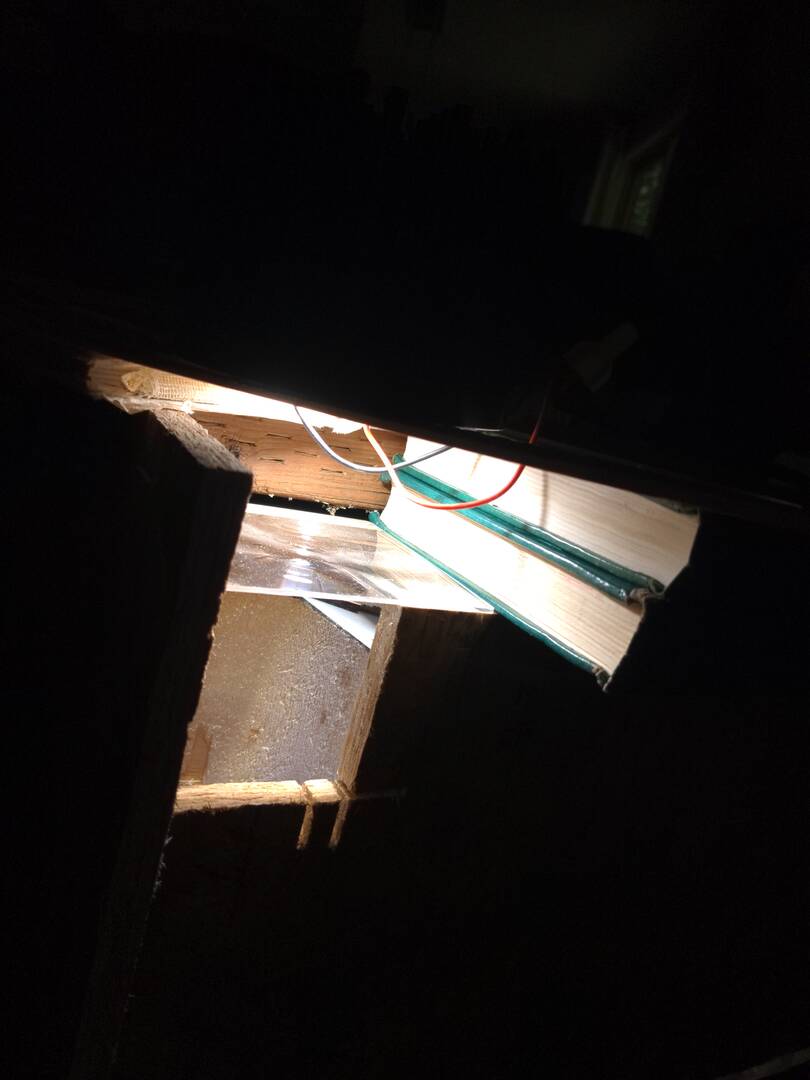
I was reading ~1000 lux with my phone camera for the light coming directly out. I'm sure I'd have a higher efficiency if the fresnel lens had collimated the light with less divergence, and had better mirror alignment.
EDIT: Also, I forgot to mention, I think I'll need to paint the inside of the light box blue so that there isn't plywood hovering in the sky 😂.
Posted : 12/07/2023 6:26 pm
marcdraco reacted
@pyrrhos do have a link to the waterproof inkjet sheets? I'm not sure what they are exactly.
Posted : 14/07/2023 4:46 pm

Hello everyone! Sorry if I'm interrupting any discussions, but I think this is an easy problem to solve. I'm making my sun out of a 100W LED and a PC fan, like Matt suggests in the video before using water cooling, so I'm instead following the wiring scheme in his video for the "sunblaster 1.0" that uses the same setup.

When I try the part where he adjusts the trimmer in order to output exactly 30V for the LED, my setup can only go from 63V down to 55V (I need 35V for my particular LED)... I'm using all the same components, including the resistors, except my power supply is 130W. Do I maybe need different resistors?
Posted : 22/07/2023 6:00 pm

Don't suppose you have a shot of the regulator chip do you? I don't know which board that is but if we know what the controller is we should be able to figure out what's going on.
The wattage of your input drive isn't important, but the VOLTAGE is. I don't know what sort of power Matt's applying here (I'm not familiar with this build).
Variable output boost converters often use switch capacitors or inductors but they don't have a regulator as such. So the voltage you get out is a multiple of what you put in (within the limits of the silicon used of course).
Take everything I say with a pinch of salt, I might be wrong and it's a very *expensive* way to learn!
Posted : 23/07/2023 3:01 pm
@jordiemc I used these but they're pretty common -- they're usually sold as inkjet sheets (sometimes mention silk screen printing) and "milky" and/or "waterproof" should narrow it down to the ones with the right coating. Somewhere back in the middle of this thread I think @nolo found them originally. The ones I got were A4 size, but it looks like there's a hefty price jump to bigger sizes. I'm looking for a cheap roll of the stuff so I can cover a 12"x48" panel without cuts, if anyone happens to know of a source.
Posted : 23/07/2023 4:58 pm
marcdraco reacted
Hi all,
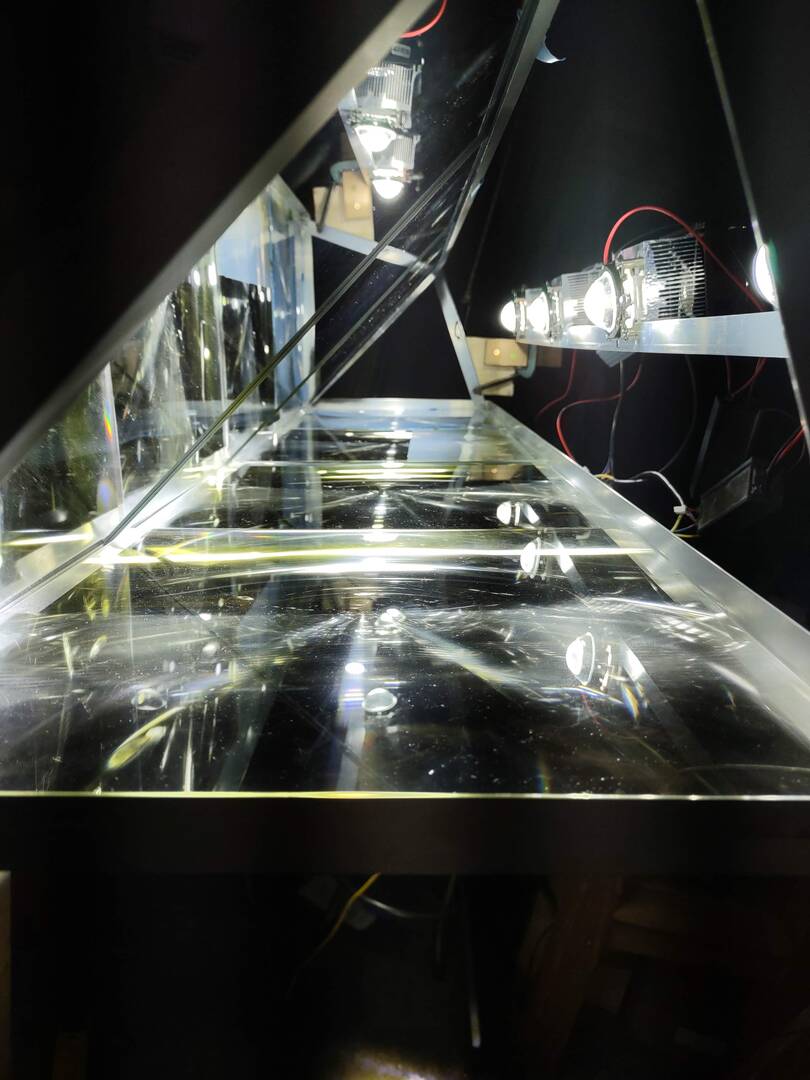
So I managed to put together a 12"x48" (300mm x 1200mm) setup out of cheap common materials that will fit in a 12" x 14.5" x 48" space -- just inside the joists of a first floor ceiling built on 16" centers (common in the U.S.). Pics and video here:
https://photos.app.goo.gl/RHN3yAPM9XhEyuXq7
Problems / ideas:
- The fresnel lenses are PMMA, with a refractive index of about 1.5. I think that's the same as most common epoxies, so instead of doing dividers between the panels, I am thinking about doing a thin epoxy layer between to make one big long fresnel array. In the video in the album above you can see that as long as the placement of the leds and lenses is precise enough, the transition from one fresnel to another is not really noticeable (especially with the inkjet sheets softening things up).
- I need a cheap source for rolls of the milky waterproof inkjet stuff so there are no cut lines. There's a pretty big price jump between A4 and anything bigger.
- The $1.83 50W 6500K leds I got off eBay are predictably pretty junky. The lines of blue/yellow on the floor where the "sunlight" falls are a projection of the underlying blue "pump" leds and what I think is probably low quality or thin phosphor. I am not sure I can justify spending ~$30 per led for high CRI 50W 6500K leds, without knowing whether they'd have the same problem? (But that's still pretty cheap considering) From research it looks like the common way these are made is blue leds as the base, and then proprietary mixes of phosphors to generate the other wavelengths. I'm ordering some other cheap alternatives to experiment with.
- The other option for dealing with the blue leds shining through is to try to smear/mix the light by frosting the concentrator lenses, I tried some with sandpaper, and it improved slightly. Will try something rougher like coarse steel wool next.
- The concentrator lenses are too big, which makes the shadows very fuzzy -- the actual sun only covers 0.5 degrees of arc in the sky so it's smaller than people imagine. The big lenses make for what looks like a huge sun. But I don't really want to get rid of them because they make it much brighter and otherwise a huge amount of light goes to waste (these are 60 degree concentrators). Might try to find smaller lenses. Would PMMA lenses stand up to the heat if they have to be 13mm from the led (the ones I have are glass)?
Idle speculation:
- led headlights are getting much cheaper. You can get super bright 6500K+ headlights that run off of 12V and have built in heatsinks and fans for like $50 or less now. I hate seeing blue lights on the road, but they would provide plenty of blue light for the inkjet sheets to disperse. Anyone thought about trying those? I am thinking you could do one headlight bracketed by two mirrors at 45 degrees />|<\ like that.
- I got separate pre-drilled and tapped heatsinks with CPU fans and lenses included for like $13 each, but I am tempted to try one big 4-foot long heatsink that I can attach the drivers to as well (the 50W drivers get super hot). I found a site that sells these pretty cheap: https://heatsinkonline.com/ -- anyone had any experience with them or similar?
Posted : 23/07/2023 5:40 pm
marcdraco reacted

@oliver like Marc said, maybe see if you can dig up some information on the board/chip?
In general you want to drive LEDs with a current source, not a voltage source. They have a negative temp coefficient with respect to voltage drop. This can cause thermal runaway and failure.
One alternative is to add a current limiting resistor in series. This will counteract the -ve temp coefficient.
Posted : 25/07/2023 7:04 am
@marcdraco Thanks for the response! Here's a link to the module I ordered. My power supply outputs 19.5V, so I guess multiplied by 3 it gives me voltages in the range of 58.5 plus/minus a handful of volts, which is what I saw in my multimeter... So I guess I should get a power supply that outputs a third of the voltage I need (35V) which is around 12V, and if I need at least 100W, I would also need 8.3A.
Alternatively, I guess I could find a voltage booster that only doubles the voltage...
Posted : 25/07/2023 10:32 am
marcdraco reacted
Hi @Oliver (love that avatar BTW),
I can see the problem you've ordered a different boost module to the one Matt used (or they have changed the design). The oscillator on the one you've ordered is underneath (those SMD chips) whereas the one in Matt's version has it on the top. I haven't checked which one he used but Ali's suppliers can come, go and change stuff without notice. This is likely why Matt's change to the regulator voltage won't bring you into range.
@pyrrhos (exemplary work there too) seems to have found some crackers that run off 12V - which is a common voltage these days. 19.5 is common for laptop bricks which is, I assume, what you're using. Smart move to recycle these where you can. Dropping that to 12V is possible but that would mean a buck regulator (or even a more "traditional" Zener design - but those are getting scarcer now due to the efficiency of these newer MOS designs). And it's a bit weird putting a buck AND a boost converter in series. You could do it but then you lose efficiency and it's overcomplicating it. It's the sort of thing I might do if I was in a jam, but not for a final design.
35V for 100W is around three amps (at the output) so you need 120W in (minimum). I just checked on Amazon and they have 120W (12v at 10A) switched power bricks from about £12 (GBP) for an "open" design that are often used in 3D printers. They would likely be cheaper on eBay or Ali but that should give you an idea. Just be wary with Ali supplied gear as they might not be as high-quality as ones that you buy in from Amazon. The probably are, but it's a bit hard to tell.
I got a mini Tesla coil for the lad who was training with me last year and it lasted all of about 5 minutes before it blew the transistor. Although, to be fair, that's about 5 minutes longer than I expected it to

Take everything I say with a pinch of salt, I might be wrong and it's a very *expensive* way to learn!
Posted : 25/07/2023 1:29 pm

FYI on the filtering sheets. I have a set of rosco color gels samples used in coloring lights for photography. There are a few opalescent diffusers gels numbered 3020(light Opal tough frost) and 3010. They seem to scatter the light as desired and( blue sky, orangish light source). They are made for use in high heat, and a 12"x12" sheet is under $10 on many photo supply sites.
The closer the the gel the light, the less scattering.
Also I picked up a second stage lighting head, for a few buck at a thrift store, I updated the bulb, but need further modifications to go with super bright led. This focuses the beam and I is a pretty amazing light by itself. I'll see if the small gel produce anything interesting and report back
I have been following this topic since the coelex light came out years ago and DIY perks just perked up my interest again. This thread is also amazing in it's info.
Thanks
Posted : 26/07/2023 10:04 pm
@arc interesting, any chance you could get a couple of photos of the light through the sheet? Would be interested to see how it compares to the inkjet film.
@marcdraco gotta be honest, those cheap Chinese mains power supplies make me nervous. I'd probably only recommend using them under supervision - if you're going to set up something more permanent probably worth forking out for a MeanWell or other reputable brand.
Posted : 29/07/2023 5:00 am
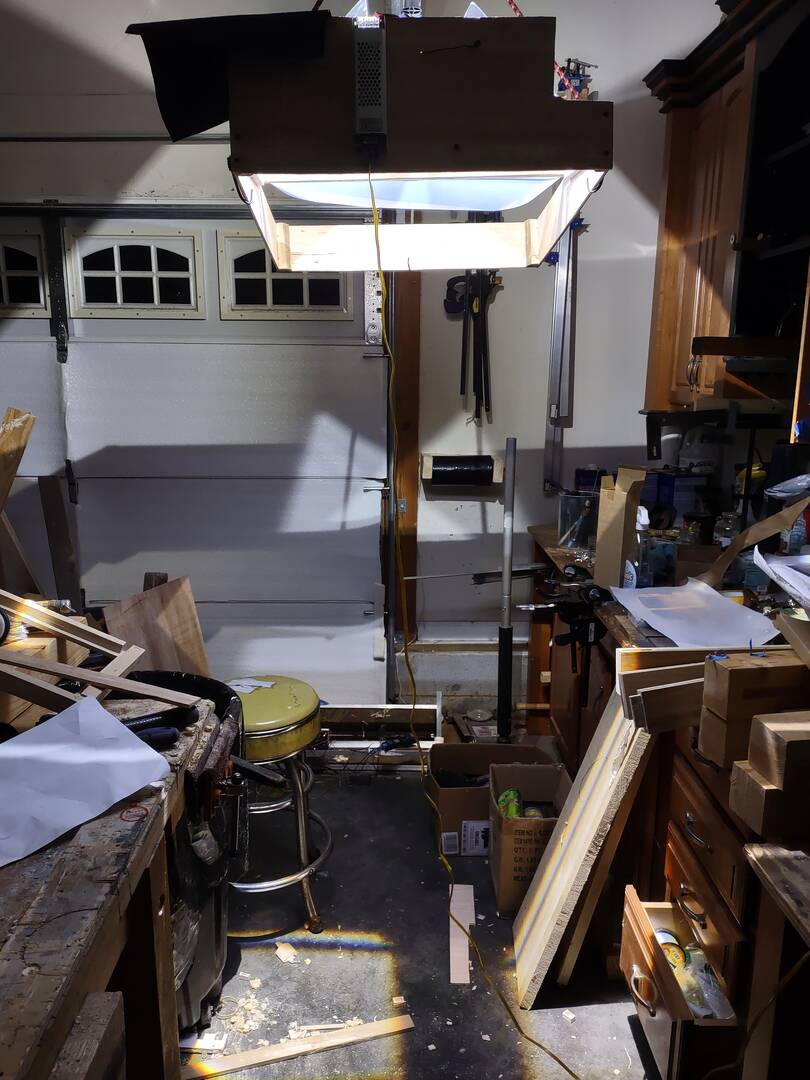
Headlights actually seem to work pretty well. I got some cheapos that claim to be 10000K, and they seem to be pretty high CRI. Through the inkjet sheets I measure the direct light at about 5800K and shade (exposed to blue "sky" only) at about 6200K.
Because they use csp LEDs instead of COB, they are much smaller and cast a sharper shadow. Only drawbacks are the whine of the fan, not sure how noticeable it will be when it's up in a ceiling, and that you have to use mirrors because LEDs are on opposite sides of the base.

Posted : 06/08/2023 5:13 pm
marcdraco reacted
I so badly need to do this! The light above my workbench is a joke and far too variable for me to colour work in DaVinci Resolve. I'm pretty lousy at colour grading anyway and anything that makes it just a little easier is a bonus!
Take everything I say with a pinch of salt, I might be wrong and it's a very *expensive* way to learn!
Posted : 06/08/2023 10:07 pm

Hello everyone,
I recently purchased this product, and it's essentially a mirror made from flexible, paper-like material similar to vinyl. You can find it on Amazon here: https://www.amazon.co.uk/gp/product/B08Z3LHX8M
Please disregard the negative reviews. To avoid any issues, I suggest cutting strips before sticking the mirror. Some customers who left bad reviews wrinkled the mirror when applying it, as seen in the photos they provided.
Believe me when I say this is a superior alternative to vinyl.
Thank you
edit: check this out
3M film that reflects 99.5% of the visible light but you can’t buy 🙁

Posted : 07/08/2023 7:00 am

@akvadrako for the aerogel, I think the best solution is to leave them between two acrylate sheets, and avoid any epoxy. The surface effects would be too hard to handle. Maybe with a vacuum pump?
For the printer sheets, I don't actually know which one I had, but the powdery film on them was very sensitive to water or touch, so I assumed non-waterproof.
For the lenses, it might be possible to buy them in bigger bulk. I'll look into it.
Let's break down each part:
-
Aerogel Encapsulation: Placing aerogel between two acrylate sheets is a reasonable approach to encapsulate it. Acrylate sheets are transparent and relatively inert, which can help maintain the properties of the aerogel. Using a vacuum pump might help remove any air trapped between the sheets, enhancing the optical clarity and thermal insulation properties of the aerogel.
-
Printer Sheets: If you're dealing with sensitive printer sheets that have a powdery film and are not waterproof, it's important to handle them with care. Water and touch sensitivity suggests they might be susceptible to damage, so it's a good idea to avoid direct contact with moisture and handle them gently.
-
Bulk Purchase of Lenses: For lenses, buying in bulk could be a cost-effective solution, especially if you're planning to use them for multiple projects or applications. Purchasing in bulk may also allow you to negotiate better prices with suppliers.
Also about which vacuum pump are you talking about is it like a vacuum cleaner thing or is it something else?
Posted : 10/08/2023 7:03 pm
@lilon I mentioned vaccum pumps because it appears to be a solution to the problem of aerogel turning opaque in epoxy. It's used to remove bubbles from large epoxy pours.
It's by no mean a recommended solution. Just a possible path of exploration. I'm talking about the large pumps used in epoxy shops and labs.
Posted : 10/08/2023 9:02 pm